



Turn contracts into actionable, auditable insights
Trusted by over 10000 happy users
























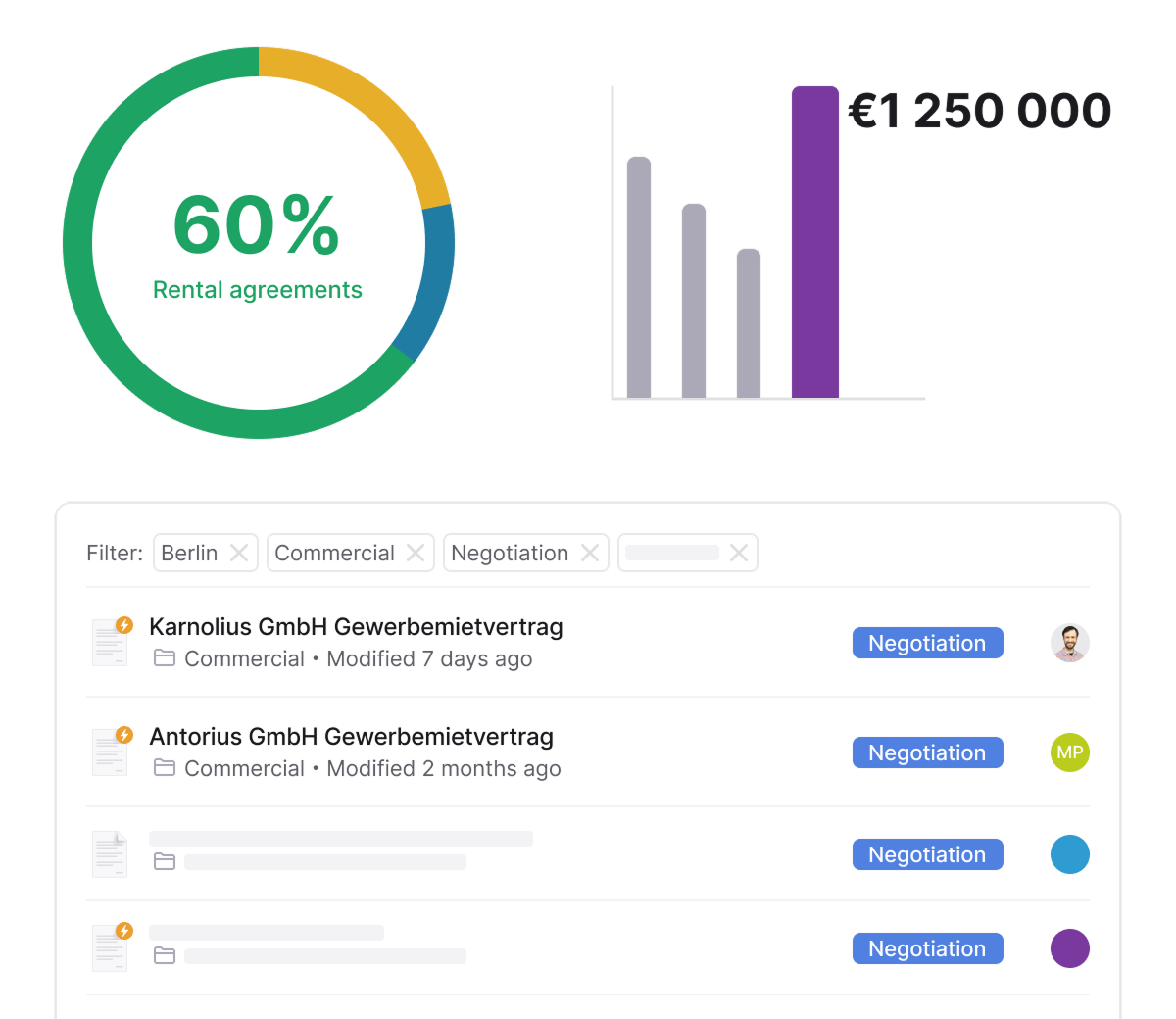
Real-time analytics and compliance
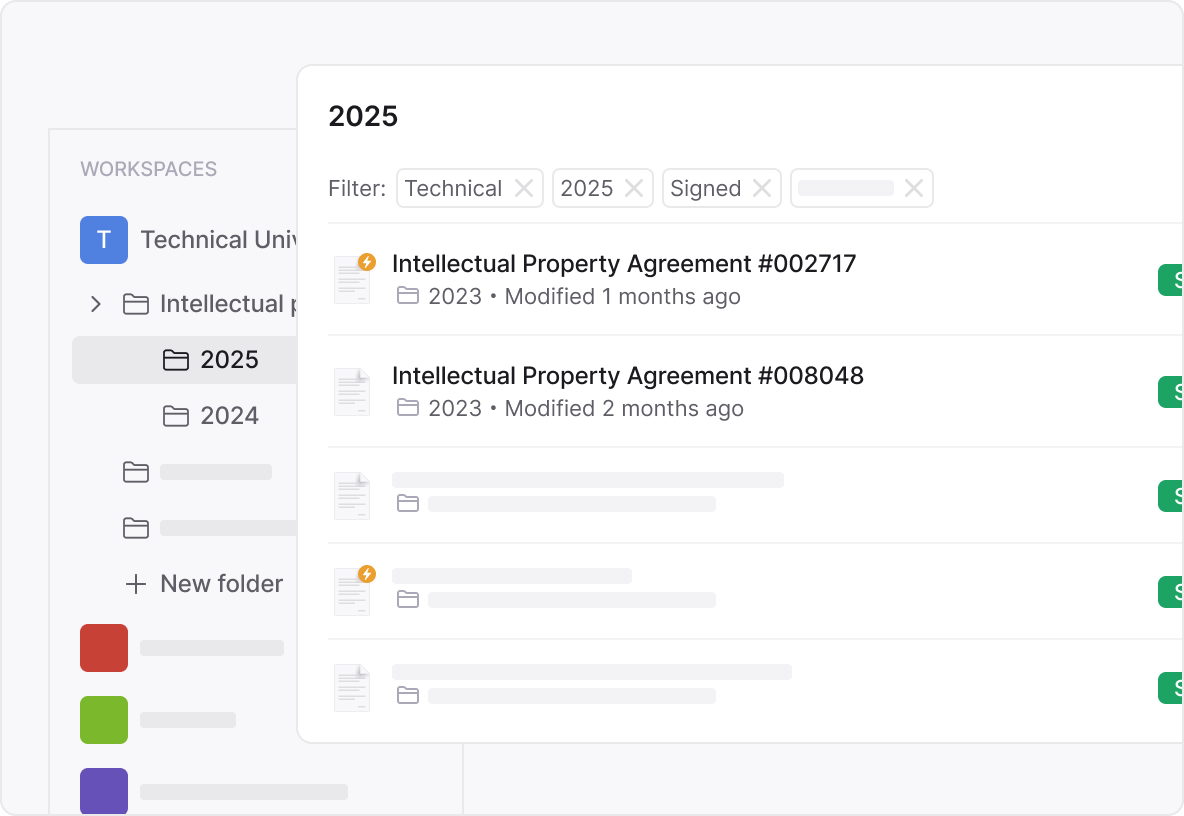
Tamper-proof data and version integrity
Custom, exportable reports
What makes Inhubber’s reporting smart and reliable


Stop guessing — lead with clear, verifiable data.
Request a demo“Powerfully simple”
 Automatic deadline monitoring is a real game changer for us. We used to manage deadlines manually in Excel spreadsheets, which was naturally error-prone. Now Inhubber ensures that we are notified in a timely manner about upcoming termination periods. This has already saved us from unnecessary costs.
Automatic deadline monitoring is a real game changer for us. We used to manage deadlines manually in Excel, which was error-prone. Now Inhubber notifies us in time about upcoming termination periods, helping us avoid missed deadlines and unnecessary costs.
Automatic deadline monitoring is a real game changer for us. We used to manage deadlines manually in Excel spreadsheets, which was naturally error-prone. Now Inhubber ensures that we are notified in a timely manner about upcoming termination periods. This has already saved us from unnecessary costs.
Automatic deadline monitoring is a real game changer for us. We used to manage deadlines manually in Excel, which was error-prone. Now Inhubber notifies us in time about upcoming termination periods, helping us avoid missed deadlines and unnecessary costs.

 Especially in the logistics sector, many contracts are long and complex. With the AI summary, I can understand a 40-page contract in just a few sentences. This saves an incredible amount of time. When I log in in the morning, I immediately see upcoming deadlines, tasks, and signature requests. That way, I know right away what I need to focus on. It used to be much more unclear.
Especially in logistics, contracts are often long and complex. With AI summaries, I can understand a 40-page contract in seconds, saving significant time. Each morning, I instantly see deadlines, tasks, and signature requests—so I know exactly what to focus on.
Especially in the logistics sector, many contracts are long and complex. With the AI summary, I can understand a 40-page contract in just a few sentences. This saves an incredible amount of time. When I log in in the morning, I immediately see upcoming deadlines, tasks, and signature requests. That way, I know right away what I need to focus on. It used to be much more unclear.
Especially in logistics, contracts are often long and complex. With AI summaries, I can understand a 40-page contract in seconds, saving significant time. Each morning, I instantly see deadlines, tasks, and signature requests—so I know exactly what to focus on.

 Inhubber has fundamentally changed the way we handle our contracts by providing a user-friendly and efficient platform that ensures complete transparency. This change has led to significant time savings, particularly through improved organization and accessibility of data. In the financial sector, it is especially useful as it helps keep track of costs and deadlines, making it an essential tool for our sustainable growth.
Inhubber has transformed contract management with a user-friendly platform and full transparency. It saves time through better organization and data access. In finance, it’s valuable for tracking costs and deadlines, supporting growth.
Inhubber has fundamentally changed the way we handle our contracts by providing a user-friendly and efficient platform that ensures complete transparency. This change has led to significant time savings, particularly through improved organization and accessibility of data. In the financial sector, it is especially useful as it helps keep track of costs and deadlines, making it an essential tool for our sustainable growth.
Inhubber has transformed contract management with a user-friendly platform and full transparency. It saves time through better organization and data access. In finance, it’s valuable for tracking costs and deadlines, supporting growth.

 Thanks to Inhubber, it is now much easier and faster to rent out apartments, and I can even rent them out across the country without having to be there.
Thanks to Inhubber, it is now much easier and faster to rent out apartments, and I can even rent them out across the country without having to be there.
Thanks to Inhubber, it is now much easier and faster to rent out apartments, and I can even rent them out across the country without having to be there.

 Before we introduced Inhubber, we missed termination deadlines several times simply because no one remembered that the contract still existed and needed to be cancelled. This led to unnecessary costs that we wanted to avoid. With Inhubber, we can now be confident that this will no longer happen.
Before Inhubber, we missed termination deadlines because contracts were overlooked, leading to unnecessary costs. Now, we’re reliably notified in time and can be confident that deadlines are no longer missed.
Before we introduced Inhubber, we missed termination deadlines several times simply because no one remembered that the contract still existed and needed to be cancelled. This led to unnecessary costs that we wanted to avoid. With Inhubber, we can now be confident that this will no longer happen.
Before Inhubber, we missed termination deadlines because contracts were overlooked, leading to unnecessary costs. Now, we’re reliably notified in time and can be confident that deadlines are no longer missed.

 The advantages I see with Inhubber are, firstly, usability, meaning it’s easy to use for our team members and business partners. The second major advantage I see with Inhubber is the whole issue of data security, data availability, and more.
The advantages I see with Inhubber are, firstly, usability, meaning it’s easy to use for our team members and business partners. The second major advantage I see with Inhubber is the whole issue of data security, data availability, and more.
The advantages I see with Inhubber are, firstly, usability, meaning it’s easy to use for our team members and business partners. The second major advantage I see with Inhubber is the whole issue of data security, data availability, and more.

 After evaluating several software solutions, we chose Inhubber – not only because it offers a web-based solution that’s accessible from anywhere, but also because of the flexibility in structuring contracts. We wanted the option of storing our contracts in clearly structured categories and areas that perfectly fit our organization.
After evaluating several solutions, we chose Inhubber for its web-based accessibility and flexible contract structuring. It allows us to organize contracts into clear categories and areas that perfectly match our organization.
After evaluating several software solutions, we chose Inhubber – not only because it offers a web-based solution that’s accessible from anywhere, but also because of the flexibility in structuring contracts. We wanted the option of storing our contracts in clearly structured categories and areas that perfectly fit our organization.
After evaluating several solutions, we chose Inhubber for its web-based accessibility and flexible contract structuring. It allows us to organize contracts into clear categories and areas that perfectly match our organization.

 Inhubber was the perfect solution for our family-owned business.
We now have a complete overview of all contracts — structured by business units and contract types. Relevant documents are always easy to find, deadlines are automatically tracked, and nothing gets lost anymore.
What impressed us most was the 100% transparency, the ease of use, and the automatic identification of contract risks. Manual effort has been significantly reduced — we save around 80% of the time compared to before.
Inhubber has sustainably professionalized and simplified our contract management.
Inhubber is the perfect solution for our family business. We now have a full overview of all contracts, clearly structured and easy to access. Deadlines are tracked automatically, risks are identified, and manual effort is reduced—saving us around 80% of the time.
Inhubber was the perfect solution for our family-owned business.
We now have a complete overview of all contracts — structured by business units and contract types. Relevant documents are always easy to find, deadlines are automatically tracked, and nothing gets lost anymore.
What impressed us most was the 100% transparency, the ease of use, and the automatic identification of contract risks. Manual effort has been significantly reduced — we save around 80% of the time compared to before.
Inhubber has sustainably professionalized and simplified our contract management.
Inhubber is the perfect solution for our family business. We now have a full overview of all contracts, clearly structured and easy to access. Deadlines are tracked automatically, risks are identified, and manual effort is reduced—saving us around 80% of the time.


Award winning CLM software












FAQ
Inhubber automatically extracts and structures contract data as soon as a document is uploaded. Every file is indexed, and its metadata — such as contract type, value, start date, and responsible user — is stored in a unified database. This structured approach enables precise filtering and analysis without manual input. You can instantly build reports across all departments using accurate, real-time data.
Unlike static spreadsheets, Inhubber reports are dynamic and always up to date. You don’t need to copy, merge, or reformat data — the system continuously updates KPIs, deadlines, and versions in real time. Each filter or report view is saved and exportable, so you can reuse your analytics anytime. It’s reporting that never goes out of sync with your contracts
Yes. Inhubber includes full version control within its reporting engine. Every edit, approval, or comment is logged with a timestamp, user ID, and version ID, making it easy to trace who changed what and when. You can visualize version histories or export them for audits and compliance checks. This ensures total accountability and document integrity.
All contract and activity data is protected by end-to-end encryption and cryptographic integrity checks. This means every version, timestamp, and signature is tamper-proof and verifiable. Reports can be exported with complete audit trails attached, guaranteeing full transparency for internal and external reviews. Inhubber ensures your reports meet ISO 27001, GDPR, and audit requirements by design.
Absolutely. Inhubber supports seamless integration with Power BI, Tableau, and internal data warehouses. You can push live contract data — including metadata, timestamps, and version logs — into your analytics environment. This allows you to combine contract performance metrics with financial, procurement, or CRM data for deeper business intelligence insights.
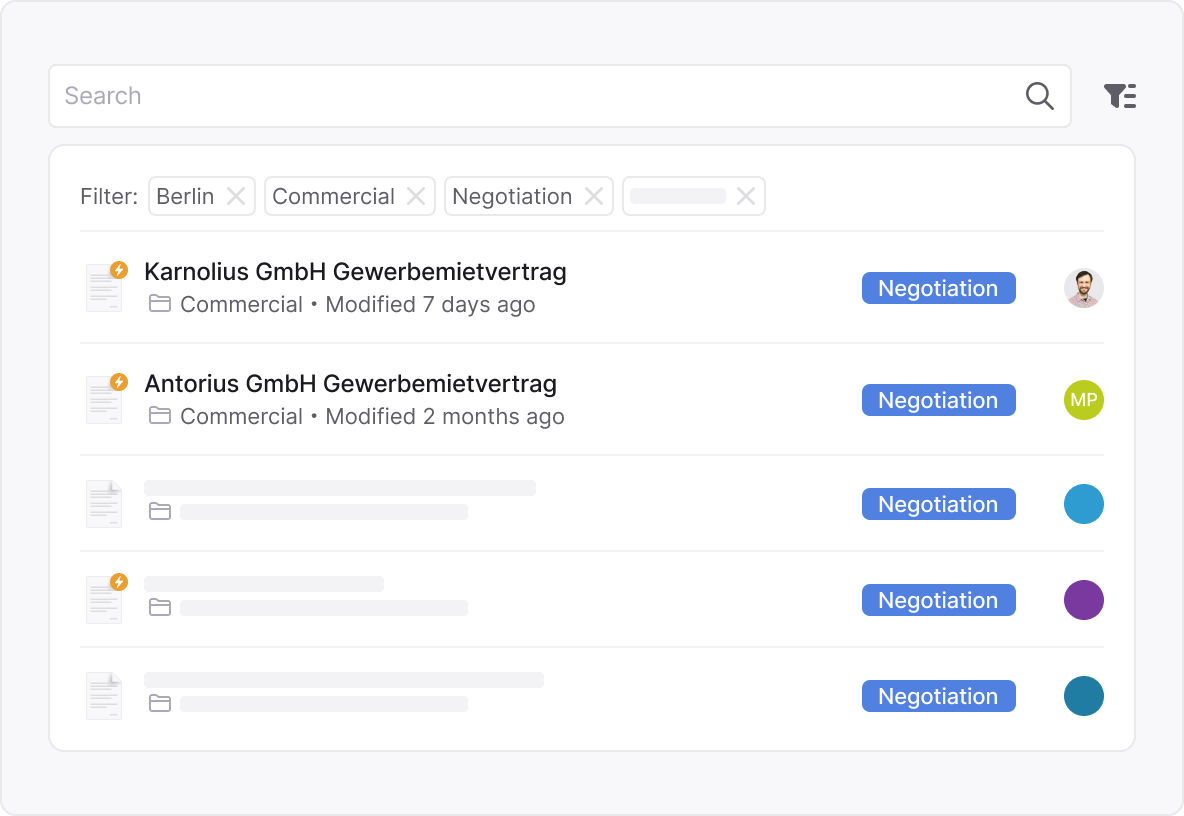
Inhubber provides granular filters that let you analyze contracts by duration, value, region, department, responsible user, or renewal date. You can even segment by metadata fields or clauses like “termination fee” or “confidentiality.” Each filter combination updates reports instantly, allowing you to discover hidden trends and take immediate action. It’s analytics built for precision and speed.
Yes — Inhubber’s reporting is designed for compliance-first organizations. It automatically identifies expired contracts, missing approvals, or deviations from policy thresholds. Each issue is linked to an audit trail, making risk detection proactive instead of reactive. You can also generate compliance dashboards to track risk exposure across departments in real time.
Every user action — from document upload to final signature — generates a timestamped log with a unique ID. These logs can be aggregated and analyzed to monitor process efficiency, approval times, or user activity trends. By turning operational data into measurable metrics, Inhubber helps teams improve speed, accountability, and collaboration without manual tracking.
Yes. Inhubber’s reporting engine is built to handle tens of thousands of documents with no performance loss. The system scales automatically as your data grows, maintaining fast search, filtering, and export speeds. Whether you manage 500 or 50,000 contracts, reports load in milliseconds, and analytics remain accurate and consistent across all entities.
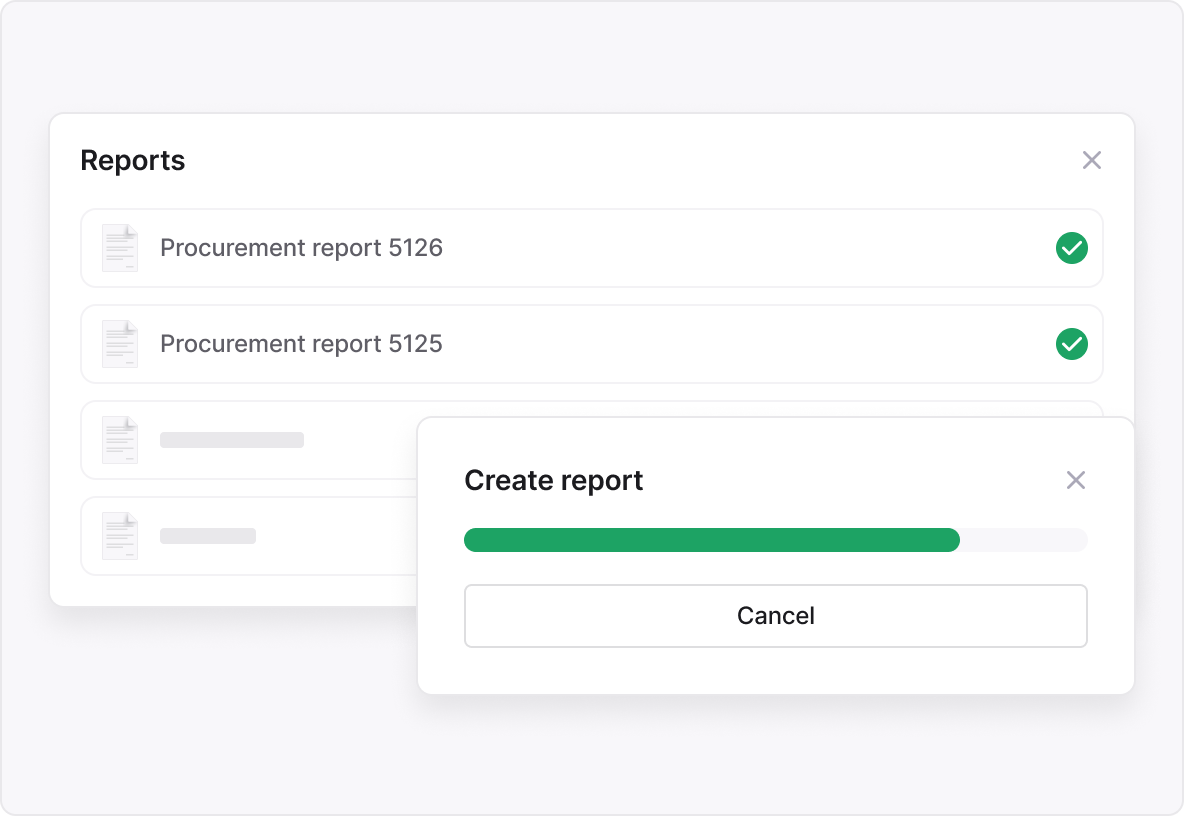
Reports can be exported in Excel, CSV, or PDF formats — with all filters, metadata, and version history preserved. Each export is timestamped and stored as part of the audit history for traceability. You can share these exports with auditors, management, or external systems without worrying about missing data or version discrepancies. Every report remains verifiable and compliant by default.
Inhubber’s reporting follows the same role-based permissions as the rest of the platform.
Users only see contracts, KPIs, and dashboards they are authorized to access.
This ensures secure analytics across departments and prevents unauthorized visibility of contract values, risk data, or version history.
All report exports also respect user permissions.
Yes. All contract data, metadata, and activity logs used in reporting are protected with end-to-end encryption.
Integrity checks ensure that version history, timestamps, and KPIs cannot be altered or manipulated.
This security model supports GDPR, ISO 27001, and internal compliance requirements — making every report audit-proof.
Absolutely. Inhubber supports reporting on all custom fields, smart metadata, and contract attributes defined by your organization.
You can filter reports by custom categories, risk levels, approval steps, contract owners, or any field created in your workspace.
This gives you flexible, organization-specific analytics without manual preparation.