In modern contract management, organizations invest heavily in workflows, approvals, signatures, and document storage. Yet one critical element is often overlooked: how contact persons are managed.
Who signs the contract? Who represents the counterparty? Who is responsible for execution, notices, or renewals?
When contact information is fragmented across spreadsheets, emails, PDFs, and personal address books, even the most advanced contract processes are exposed to risk. This is where a company-wide address book becomes a foundational building block for enterprise-grade contract management.
The Hidden Problem: Contact Chaos in Contract Processes
At a small scale, managing contacts manually may seem manageable. But as organizations grow, the reality looks very different:
- The same contact person exists multiple times with different spellings
- Roles and responsibilities are unclear or outdated
- Teams recreate contacts again and again for new contracts
- No one knows which contact data is correct
For legal, procurement, and compliance teams, this creates ongoing operational friction and hidden governance gaps.
The real impact often becomes visible only when an audit or internal review takes place.
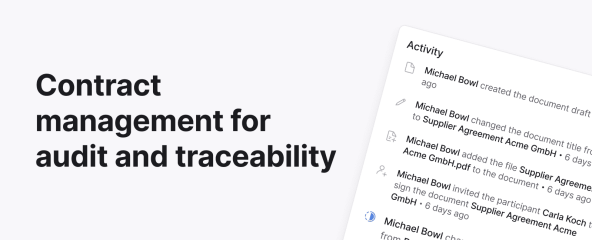
When auditors ask who officially represented a counterparty, who was authorized to sign, or which contact was responsible for contractual notices, answers are scattered across contracts, emails, and spreadsheets. Reconstructing this information becomes a manual, time-consuming exercise — often under time pressure.
At this point, the problem is no longer inefficiency, but lack of traceability.
Contracts may still be signed, but organizations cannot always demonstrate — clearly and consistently — who was involved, in which role, and based on which information.This is where unmanaged contact data turns from a minor inconvenience into a real audit and compliance risk.
Why an Address Book Is Not “Just a Contact List”
A personal address book stores phone numbers and emails. A company-wide address book for contract management defines who is officially involved in legally binding agreements. This distinction is crucial.
In a contract context, a contact person is:
- A legally relevant entity
- Linked to specific roles (signatory, legal contact, operational owner)
- Reused across multiple contracts
- Subject to audits, compliance checks, and internal controls
Treating contacts as structured, shared data — not free text — changes how contracts are managed at scale.
Risks of Decentralized Contact Management
Without a centralized address book, organizations face recurring risks:
- Inconsistent or outdated contact data
A contact updated in one contract remains outdated in others. - Duplicate and conflicting records
The same person appears multiple times, making reporting and governance unreliable. - Compliance and audit gaps
Auditors cannot easily trace who was involved in which contract and in what role. - Slower contract execution
Teams waste time searching, recreating, or verifying contact information.
Over time, these issues compound — especially in regulated or multinational environments.
What Is a Company-Wide Address Book in Inhubber?
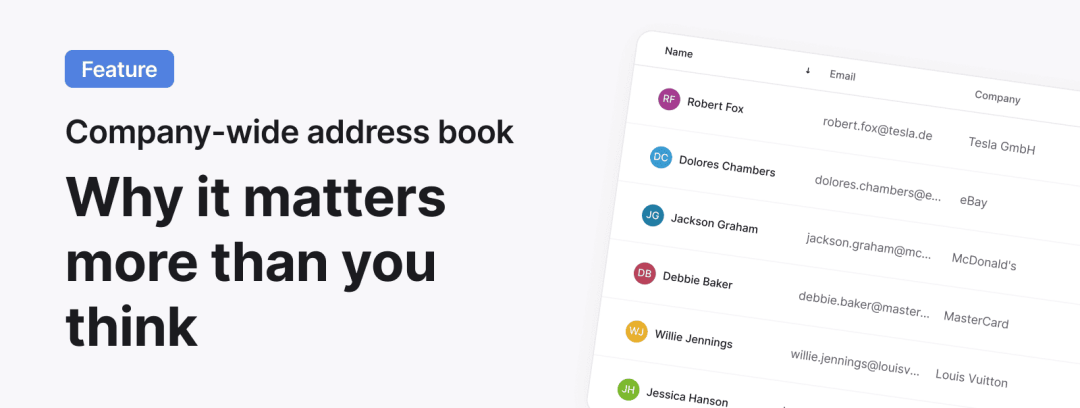
The company-wide address book in Inhubber introduces a centralized and shared approach to managing contact persons across the entire organization. Instead of creating and maintaining contacts separately within each individual contract, teams work with a unified contact base that is available company-wide.
This approach establishes a single source of truth for contact persons, ensuring that names, roles, and contact details remain consistent wherever they are used. Contact persons can be reused across multiple contracts, eliminating repetitive data entry and reducing the risk of inconsistencies or outdated information.
By structuring contact data rather than relying on free-text entries, organizations gain better control and visibility over who is involved in contractual relationships. Legal, procurement, compliance, and business teams all work with the same set of contact persons, improving alignment and collaboration across departments.
As a result, contact management evolves from an ad-hoc, manual activity into a governed, transparent process that supports scalability, accuracy, and enterprise-level control within Inhubber.
How Centralized Contact Management Improves Daily Work
- Faster contract creation
Teams can quickly select existing contact persons instead of entering data repeatedly. - Fewer errors and corrections
Standardized contact data reduces typos, inconsistencies, and rework. - Better collaboration across teams
Legal, procurement, finance, and business teams work with the same contact information. - Cleaner contract data at scale
As the contract portfolio grows, data quality remains stable instead of degrading.
Address Books as a Compliance and Governance Tool
From a compliance perspective, contact management is not optional — it is a critical control point within the contract lifecycle.
A centralized, company-wide address book plays a direct role in supporting compliance and governance by ensuring that contact data used in contracts is consistent, controlled, and traceable.
Audit readiness improves significantly when contact persons are managed centrally. Auditors and internal reviewers can clearly identify who represented each party, who was authorized to sign, and which contacts were responsible for contractual communication. Instead of reconstructing this information from scattered documents and emails, organizations can rely on structured, reusable data.
Clear ownership and accountability are another key benefit. A governed address book makes it explicit who represents a counterparty and in what role. This reduces ambiguity, especially in long-running contracts or complex contractual structures involving multiple stakeholders.
Governance standards and internal policies are easier to enforce when contact data is standardized. Required fields, consistent naming conventions, and defined roles help align contract data with internal guidelines and regulatory expectations.
Finally, risk reduction becomes a natural outcome of structured contact management. By avoiding outdated, duplicated, or unauthorized contact persons, organizations reduce the risk of miscommunication, invalid notices, or compliance findings during audits.
For enterprise organizations operating in regulated environments, a centralized address book becomes a foundational element of audit readiness, internal controls, and contract governance.
Enterprise-Scale Contract Management Requires Structure
Enterprise contract management is not about managing individual contracts efficiently — it is about building systems that continue to work as complexity increases.
As organizations grow, contract volumes rise rapidly. What once were dozens of agreements become hundreds or thousands, each involving multiple internal and external stakeholders. At the same time, responsibilities change due to organizational restructuring, role changes, or personnel turnover.
With growth comes increased scrutiny. Compliance requirements become stricter, internal controls more formalized, and expectations for transparency higher. In this environment, unstructured contact management quickly becomes a bottleneck.
A company-wide address book ensures that contact data scales alongside the organization. Instead of multiplying inconsistencies, it provides a stable, governed foundation that supports growing contract portfolios, cross-functional collaboration, and evolving compliance demands.
By treating contact persons as managed data — not ad-hoc entries — enterprise organizations create the structure needed to maintain control, clarity, and confidence as their contract management operations expand.
Address Book vs CRM: Why Contract Teams Need Both
CRMs are designed for sales relationships. Contract management systems are designed for legal and operational accuracy.
In a CRM:
- Contacts are sales-oriented
- Data changes frequently
- Legal relevance is secondary
In contract management:
- Contacts are legally significant
- Stability and traceability matter
- Accuracy outweighs flexibility
The address book in Inhubber complements CRM systems by focusing on what matters for contracts: structure, reuse, and compliance.
Best Practices for Using a Company-Wide Address Book
To get the most value from a company-wide address book, organizations should approach contact management as a defined process rather than a one-time setup.
It is important to clearly define which contact fields are mandatory and ensure they are used consistently across the organization. This creates a common standard and prevents incomplete or ambiguous contact records from entering the system.
Wherever possible, structured fields should be used instead of free-text entries. Structured data improves accuracy, enables reuse across contracts, and supports reporting, governance, and audit requirements more effectively than unstructured information.
Ownership also plays a critical role. Assigning responsibility for maintaining contact data helps ensure that updates are made when roles change, contact details are updated, or relationships end. Without clear ownership, even centralized systems can quickly lose data quality.
Teams should also be encouraged to reuse existing contact persons rather than creating new entries for the same individuals. This reduces duplication and keeps contract data clean and consistent.
Finally, periodic reviews of the address book help identify outdated or unused entries. Regular cleanup ensures that the address book remains relevant, accurate, and reliable as the organization and its contract portfolio evolve.
Together, these practices help maintain high data quality over time and ensure that the company-wide address book continues to support efficient, compliant, and scalable contract management within Inhubber.
Conclusion: A Small Feature with a Big Impact
A company-wide address book may seem like a minor addition — but in reality, it is a cornerstone of mature contract management.
By centralizing contact persons, organizations:
- Reduce operational and compliance risks
- Improve efficiency across teams
- Strengthen governance and audit readiness
- Build a scalable foundation for enterprise growth
With the introduction of the company-wide address book, Inhubber takes another step toward structured, enterprise-grade contract management — where every detail matters.