Contracts are the backbone of almost every organization. They define relationships with customers, suppliers, partners, service providers, employees, and public institutions. Every financial obligation, operational dependency, and legal responsibility is ultimately rooted in a contract.
Despite this central role, contract processes remain one of the least structured and least transparent areas in many companies. Contracts are often treated as static documents rather than as dynamic business instruments. As a result, organizations lose visibility, miss deadlines, accept unnecessary risks, and struggle to answer even basic questions about their contractual obligations.
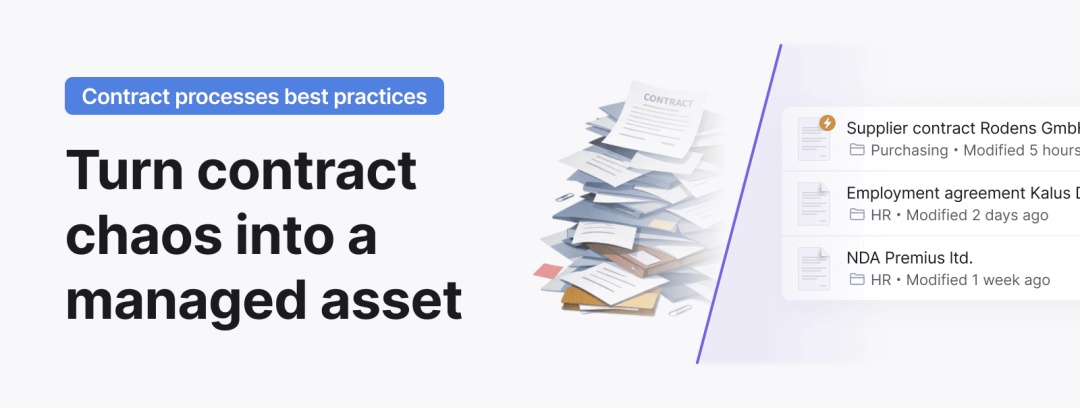
Best practices in contract processes aim to change this fundamentally. They focus on transforming contracts from scattered PDF files into a managed, transparent, and data-driven business asset. This article outlines those best practices, drawing on real challenges observed across Inhubber customers and practical lessons from implementing Contract Lifecycle Management (CLM).
Why Traditional Contract Processes Fail as Organizations Grow
Most contract-related problems do not appear suddenly. They evolve gradually as organizations expand. In smaller companies, employees often compensate for missing structures with personal knowledge, informal communication, and manual tracking. While this may work temporarily, it does not scale.
As the number of contracts increases, several structural weaknesses become apparent.
First, there is rarely a single source of truth. Contracts are stored across email inboxes, local drives, cloud folders, ERP systems, or shared network drives. Different departments maintain their own repositories, often without coordination. As a result, no one has a complete overview of the organization’s contractual landscape.
Second, manual tracking of deadlines becomes unreliable. Renewal dates, termination windows, notice periods, and performance milestones are frequently monitored using spreadsheets or calendar reminders. This approach depends entirely on individual discipline and is highly prone to error.
Many organizations therefore implement contract reminder software to automatically track contract deadlines, renewal dates, and obligations across the entire contract portfolio. Missed deadlines often lead to automatic renewals, unexpected costs, or lost negotiation opportunities.
Third, transparency for management is limited. Executives need clear answers to fundamental questions:
What obligations does the company currently have?
Which contracts carry significant legal or financial risks?
Which agreements are critical to ongoing operations or revenue generation?
In many organizations, these answers are fragmented or unavailable. Knowledge is distributed across individuals rather than embedded in systems. When employees leave, change roles, or are simply unavailable, critical contractual knowledge disappears with them.
Across Inhubber customers — from private enterprises to public-sector organizations — these challenges appeared consistently. The root cause was always the same: contracts were not managed as structured processes and were not analyzed as business assets.
Contracts as a Lifecycle, Not as Static Documents
One of the most important best practices in contract processes is shifting the mindset. Contracts should not be viewed as static PDF files that are created, signed, and archived. Instead, they must be managed as living processes that evolve over time.
Every contract follows a lifecycle. It starts with preparation and planning, including template selection, internal reviews, and negotiations. Once signed, the contract enters its operational phase, where obligations must be fulfilled, service levels monitored, and payments executed. Finally, contracts reach a decision point: renewal, renegotiation, or termination.
Organizations that fail to manage this lifecycle tend to operate reactively. They respond only when problems occur — a missed deadline, a dispute, or an unexpected invoice. In contrast, companies that adopt a lifecycle-based approach gain the ability to act proactively, anticipate risks, and make informed decisions.
This shift was particularly evident in the case of Hafenbetriebe Worms GmbH and Stadt Worms Beteiligungs-GmbH. Decades of contracts, some dating back to the mid-20th century, had accumulated across paper archives and disconnected systems. By adopting a digital CLM approach, these organizations transformed historical contracts into structured, accessible data and established transparency across the entire contract lifecycle.
Centralized Contract Storage as the Foundation
No contract best practice can be implemented effectively without centralized storage. A single, digital contract repository is the foundation of modern contract management.
Centralized storage means that all contracts are stored in one secure location, regardless of department or contract type. Access is controlled through roles and permissions, ensuring that sensitive information remains protected while still being accessible to authorized users. Advanced search functionality allows users to locate contracts quickly based on keywords, parties, dates, or contract attributes.
Beyond convenience, centralized storage eliminates structural risk. It reduces dependency on individual employees, prevents document loss, and ensures continuity when staff changes occur. It also simplifies audits, compliance checks, and internal reporting, as all relevant documents are immediately available.
At MSB-Mobility Service Berlin GmbH, centralized storage significantly reduced the administrative burden associated with contract retrieval. Instead of searching through folders and archives, employees gained instant access to relevant agreements, improving collaboration between departments and increasing operational efficiency.
Standardization Through Templates and Clauses
Another cornerstone of best practices in contract processes is standardization. Without standardized templates, organizations repeatedly reinvent contracts, increasing the risk of inconsistent language, legal gaps, and avoidable negotiation cycles.
Standard templates serve as a controlled starting point. They reflect approved legal language, compliance requirements, and business policies. By reusing and maintaining templates, companies ensure consistency across agreements while still allowing flexibility where necessary.
Standardization also reduces workload for legal teams. Instead of reviewing every contract from scratch, legal experts can focus on deviations from standard terms. This accelerates contract creation while maintaining legal quality.
Within a CLM framework, templates are not static documents. They are managed assets that evolve with regulatory changes, business strategy, and market conditions. This ensures that contract creation remains both efficient and compliant.
Transparent Approval Workflows and Version Control
Contract approval is one of the most sensitive stages in the lifecycle. When approvals are handled via email chains or messaging tools, confusion is almost inevitable. Stakeholders may work on outdated versions, approvals may be implicit rather than documented, and accountability becomes unclear.
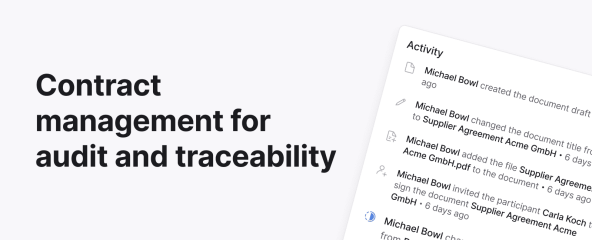
Best practices require structured approval workflows. These workflows define who must review and approve a contract, in what order, and under which conditions. Every action is logged, creating a transparent audit trail.
Clear version control ensures that all stakeholders work on the same document. Changes are tracked, previous versions remain accessible, and the risk of signing the wrong version is eliminated.
In the case of rebuy GmbH, implementing structured approval workflows reduced delays and improved coordination between legal and business teams. Each participant understood their role and the current status of the contract, leading to faster and more reliable decision-making.
Electronic Signatures as an Integrated Process Step
Electronic signatures are no longer a convenience feature; they are a best practice in modern contract management. When used correctly, they eliminate friction between approval and execution and enable seamless digital workflows.
From a best-practice perspective, electronic signatures provide several advantages. They significantly reduce contract closing times, especially in distributed or international organizations. They remove logistical complexity and reduce the risk of lost or unsigned documents. Most importantly, they integrate signing directly into the contract lifecycle.
The Bukinist case illustrates this clearly. By adopting electronic signatures through Inhubber, the company accelerated contract closures with partners and authors, eliminated paper-based processes, and supported business growth without increasing administrative overhead. The legal validity of contracts was preserved, while operational efficiency improved significantly.
Within a CLM environment, signed contracts are automatically stored, indexed, and made available for monitoring and analysis, ensuring continuity across the lifecycle.
Proactive Deadline and Obligation Management
Missed deadlines are among the most costly failures in contract management. Renewal dates, termination windows, payment milestones, and performance obligations must be tracked reliably.
Best practices emphasize automation. Instead of relying on manual reminders, systems should proactively notify responsible parties well in advance. This allows organizations to make deliberate decisions rather than reacting under pressure.
Automated deadline management also supports compliance and risk mitigation. Obligations are clearly assigned, deadlines are visible, and accountability is established.
At P3 Clinic, automated reminders reduced administrative effort and minimized the risk of missed deadlines — a critical factor in the healthcare sector, where contractual compliance directly affects service quality and regulatory obligations.
Contract Analytics and AI: From Storage to Strategic Insight
Modern contract processes do not end with storage and tracking. Best practices extend into analytics and insight generation. Organizations must be able to understand their contract portfolios, identify risks, and extract value from contractual data.
AI-powered tools enable automatic extraction of key terms, classification of contracts, and identification of risk patterns. This is especially valuable for organizations managing hundreds or thousands of agreements, where manual analysis is unrealistic.
Across Inhubber customer cases, AI-supported contract analysis made it possible to structure legacy contracts, gain portfolio-wide visibility, and support informed decision-making without months of manual work.
Contracts as a Cross-Functional Management Tool
When contract processes follow best practices, contracts cease to be the exclusive responsibility of legal departments. They become a shared resource for finance, procurement, HR, and executive management.
Finance teams gain visibility into payment obligations and long-term liabilities. Procurement teams can monitor supplier performance and renewal opportunities. HR departments manage employment contracts with clarity and consistency. Executives gain a consolidated view of risks and commitments.
This cross-functional transparency transforms contracts into a strategic management tool rather than a back-office burden.
Conclusion
Best practices in contract processes are not primarily about technology. They are about adopting the right mindset and establishing structured, transparent workflows. Contracts must be visible, manageable, and analyzable throughout their entire lifecycle.
Organizations that embrace a CLM approach achieve measurable benefits: reduced risk, faster processes, improved transparency, and stronger decision-making. Contracts evolve from forgotten documents into strategic assets.
Inhubber supports this transformation by combining practical experience, real customer use cases, and a comprehensive CLM platform designed for modern business needs.