



Secure contract management for public institutions
Built for municipalities, public agencies, utilities, and government organizations that can’t afford gaps in accountability.




in Germany

certified

encrypted
Trusted by over 10000 happy users


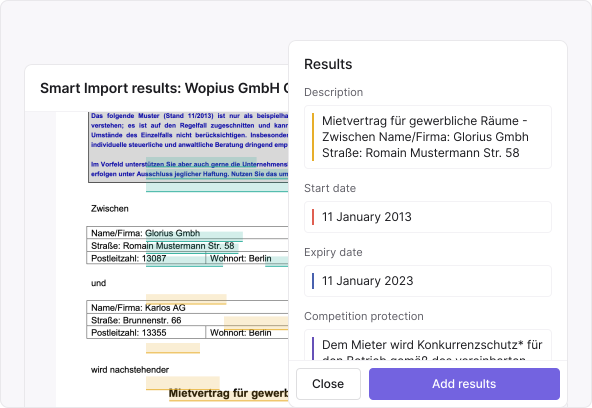
Extract Critical Contract Information Automatically
In addition, AI-powered analysis helps process lengthy documents more efficiently — deadlines, obligations, and risk positions are identified automatically, without the need to manually review every page.
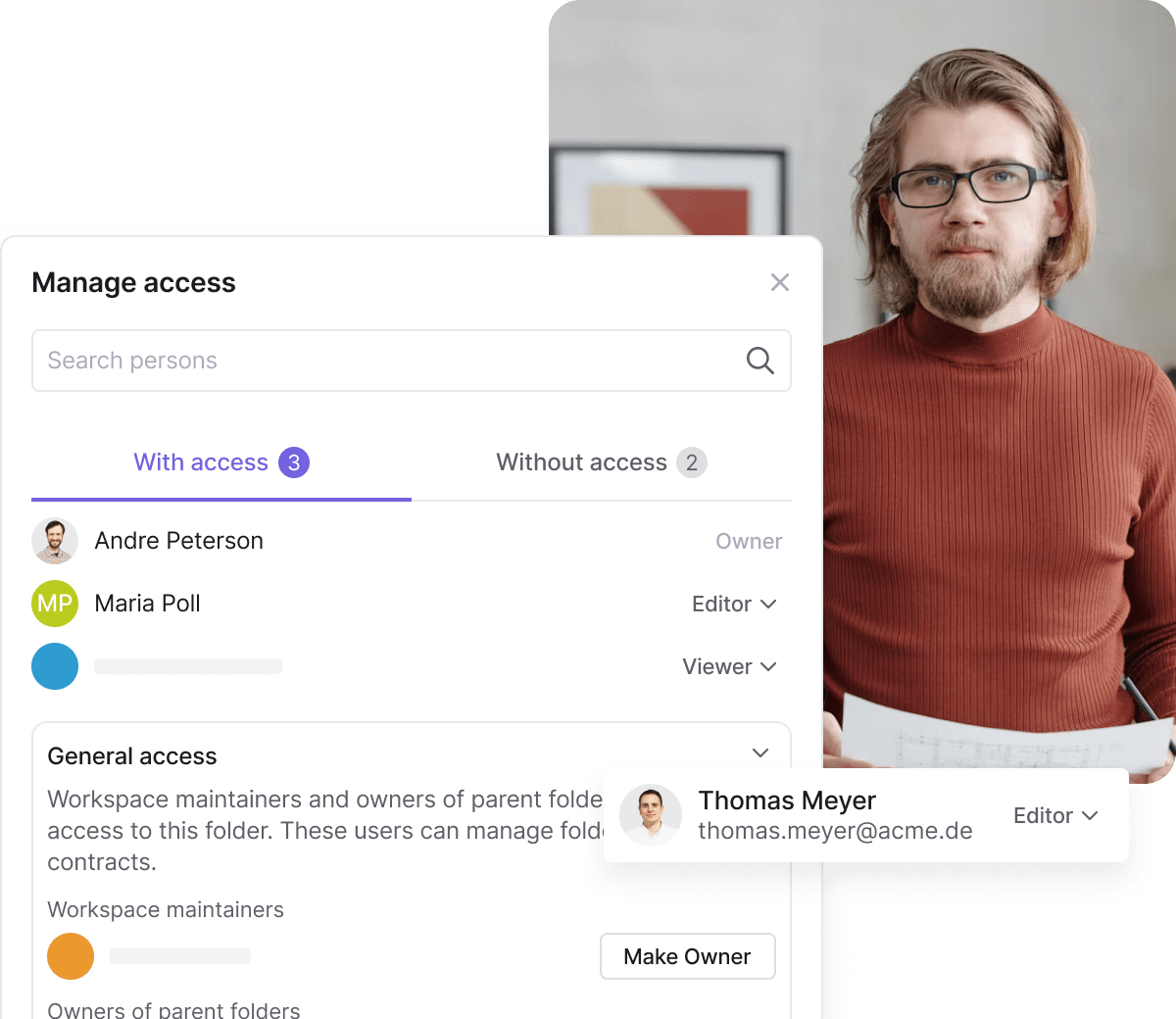
Ensure Secure Access and Full Accountability
Every action is automatically logged and documented in an audit-proof manner. This ensures that all requirements for internal and external audits are met at any time — fully traceable and without additional effort.
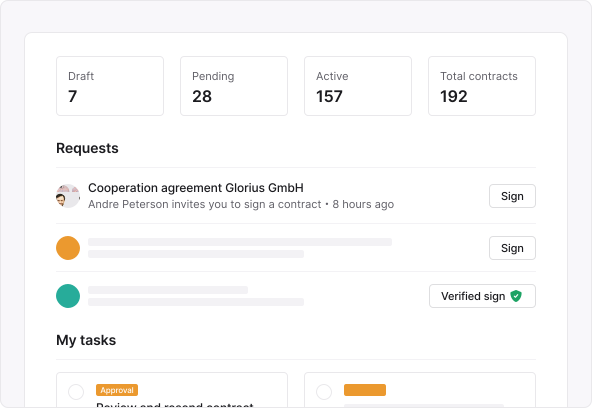
Maintain Compliance and Contract Transparency
Inhubber keeps all your contracts, procurement documents, and related records in one secure, organized place. Automated reminders make sure renewal dates and notice periods don’t get missed. And when an audit comes around or a report is due, the information you need is already there — no scrambling required. Rest assured that your contracts are aligned with statutory requirements, promoting ethical practices and minimizing legal disputes.
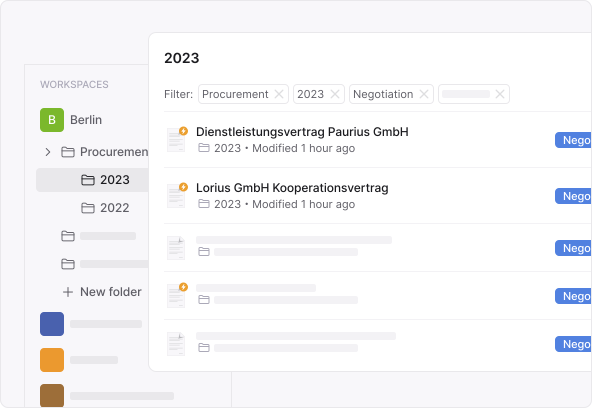
Modernize Public Sector Contract Management
Discover how municipalities, government agencies, public utilities, and other public organizations use Inhubber to manage contracts securely, stay compliant, and reduce the administrative burden on their teams.
“Powerfully simple”
 Automatic deadline monitoring is a real game changer for us. We used to manage deadlines manually in Excel spreadsheets, which was naturally error-prone. Now Inhubber ensures that we are notified in a timely manner about upcoming termination periods. This has already saved us from unnecessary costs.
Automatic deadline monitoring is a real game changer for us. We used to manage deadlines manually in Excel, which was error-prone. Now Inhubber notifies us in time about upcoming termination periods, helping us avoid missed deadlines and unnecessary costs.
Automatic deadline monitoring is a real game changer for us. We used to manage deadlines manually in Excel spreadsheets, which was naturally error-prone. Now Inhubber ensures that we are notified in a timely manner about upcoming termination periods. This has already saved us from unnecessary costs.
Automatic deadline monitoring is a real game changer for us. We used to manage deadlines manually in Excel, which was error-prone. Now Inhubber notifies us in time about upcoming termination periods, helping us avoid missed deadlines and unnecessary costs.

 Especially in the logistics sector, many contracts are long and complex. With the AI summary, I can understand a 40-page contract in just a few sentences. This saves an incredible amount of time. When I log in in the morning, I immediately see upcoming deadlines, tasks, and signature requests. That way, I know right away what I need to focus on. It used to be much more unclear.
Especially in logistics, contracts are often long and complex. With AI summaries, I can understand a 40-page contract in seconds, saving significant time. Each morning, I instantly see deadlines, tasks, and signature requests—so I know exactly what to focus on.
Especially in the logistics sector, many contracts are long and complex. With the AI summary, I can understand a 40-page contract in just a few sentences. This saves an incredible amount of time. When I log in in the morning, I immediately see upcoming deadlines, tasks, and signature requests. That way, I know right away what I need to focus on. It used to be much more unclear.
Especially in logistics, contracts are often long and complex. With AI summaries, I can understand a 40-page contract in seconds, saving significant time. Each morning, I instantly see deadlines, tasks, and signature requests—so I know exactly what to focus on.

 Inhubber has fundamentally changed the way we handle our contracts by providing a user-friendly and efficient platform that ensures complete transparency. This change has led to significant time savings, particularly through improved organization and accessibility of data. In the financial sector, it is especially useful as it helps keep track of costs and deadlines, making it an essential tool for our sustainable growth.
Inhubber has transformed contract management with a user-friendly platform and full transparency. It saves time through better organization and data access. In finance, it’s valuable for tracking costs and deadlines, supporting growth.
Inhubber has fundamentally changed the way we handle our contracts by providing a user-friendly and efficient platform that ensures complete transparency. This change has led to significant time savings, particularly through improved organization and accessibility of data. In the financial sector, it is especially useful as it helps keep track of costs and deadlines, making it an essential tool for our sustainable growth.
Inhubber has transformed contract management with a user-friendly platform and full transparency. It saves time through better organization and data access. In finance, it’s valuable for tracking costs and deadlines, supporting growth.

 Thanks to Inhubber, it is now much easier and faster to rent out apartments, and I can even rent them out across the country without having to be there.
Thanks to Inhubber, it is now much easier and faster to rent out apartments, and I can even rent them out across the country without having to be there.
Thanks to Inhubber, it is now much easier and faster to rent out apartments, and I can even rent them out across the country without having to be there.

 Before we introduced Inhubber, we missed termination deadlines several times simply because no one remembered that the contract still existed and needed to be cancelled. This led to unnecessary costs that we wanted to avoid. With Inhubber, we can now be confident that this will no longer happen.
Before Inhubber, we missed termination deadlines because contracts were overlooked, leading to unnecessary costs. Now, we’re reliably notified in time and can be confident that deadlines are no longer missed.
Before we introduced Inhubber, we missed termination deadlines several times simply because no one remembered that the contract still existed and needed to be cancelled. This led to unnecessary costs that we wanted to avoid. With Inhubber, we can now be confident that this will no longer happen.
Before Inhubber, we missed termination deadlines because contracts were overlooked, leading to unnecessary costs. Now, we’re reliably notified in time and can be confident that deadlines are no longer missed.

 The advantages I see with Inhubber are, firstly, usability, meaning it’s easy to use for our team members and business partners. The second major advantage I see with Inhubber is the whole issue of data security, data availability, and more.
The advantages I see with Inhubber are, firstly, usability, meaning it’s easy to use for our team members and business partners. The second major advantage I see with Inhubber is the whole issue of data security, data availability, and more.
The advantages I see with Inhubber are, firstly, usability, meaning it’s easy to use for our team members and business partners. The second major advantage I see with Inhubber is the whole issue of data security, data availability, and more.

 After evaluating several software solutions, we chose Inhubber – not only because it offers a web-based solution that’s accessible from anywhere, but also because of the flexibility in structuring contracts. We wanted the option of storing our contracts in clearly structured categories and areas that perfectly fit our organization.
After evaluating several solutions, we chose Inhubber for its web-based accessibility and flexible contract structuring. It allows us to organize contracts into clear categories and areas that perfectly match our organization.
After evaluating several software solutions, we chose Inhubber – not only because it offers a web-based solution that’s accessible from anywhere, but also because of the flexibility in structuring contracts. We wanted the option of storing our contracts in clearly structured categories and areas that perfectly fit our organization.
After evaluating several solutions, we chose Inhubber for its web-based accessibility and flexible contract structuring. It allows us to organize contracts into clear categories and areas that perfectly match our organization.

 Inhubber was the perfect solution for our family-owned business.
We now have a complete overview of all contracts — structured by business units and contract types. Relevant documents are always easy to find, deadlines are automatically tracked, and nothing gets lost anymore.
What impressed us most was the 100% transparency, the ease of use, and the automatic identification of contract risks. Manual effort has been significantly reduced — we save around 80% of the time compared to before.
Inhubber has sustainably professionalized and simplified our contract management.
Inhubber is the perfect solution for our family business. We now have a full overview of all contracts, clearly structured and easy to access. Deadlines are tracked automatically, risks are identified, and manual effort is reduced—saving us around 80% of the time.
Inhubber was the perfect solution for our family-owned business.
We now have a complete overview of all contracts — structured by business units and contract types. Relevant documents are always easy to find, deadlines are automatically tracked, and nothing gets lost anymore.
What impressed us most was the 100% transparency, the ease of use, and the automatic identification of contract risks. Manual effort has been significantly reduced — we save around 80% of the time compared to before.
Inhubber has sustainably professionalized and simplified our contract management.
Inhubber is the perfect solution for our family business. We now have a full overview of all contracts, clearly structured and easy to access. Deadlines are tracked automatically, risks are identified, and manual effort is reduced—saving us around 80% of the time.

 With Inhubber, we now have a central overview of our contracts for the first time and much better control over long-term deadlines. What stands out most is how intuitive the system is: responsibilities are clearer, contracts are easier to find, and relevant information is available in a structured way. Inhubber makes professional contract management simple — and I would clearly recommend it to other municipal utilities.
With Inhubber, we have a central overview of our contracts and much better control over deadlines. The intuitive system creates clearer responsibilities, makes contracts easier to find, and noticeably simplifies our day-to-day work.
With Inhubber, we now have a central overview of our contracts for the first time and much better control over long-term deadlines. What stands out most is how intuitive the system is: responsibilities are clearer, contracts are easier to find, and relevant information is available in a structured way. Inhubber makes professional contract management simple — and I would clearly recommend it to other municipal utilities.
With Inhubber, we have a central overview of our contracts and much better control over deadlines. The intuitive system creates clearer responsibilities, makes contracts easier to find, and noticeably simplifies our day-to-day work.

 With Inhubber, we now have a clear central structure for our contracts, deadlines, and responsibilities. The system is easy to use, flexible enough to support our different departments, and helps us find contract information much faster. Automated deadline tracking and clearly defined access rights also make our day-to-day contract work more reliable and much easier to manage.
With Inhubber, we now have a clear central structure for our contracts, deadlines, and responsibilities. The system is easy to use, flexible enough for our different departments, and makes everyday contract work noticeably faster and more reliable.
With Inhubber, we now have a clear central structure for our contracts, deadlines, and responsibilities. The system is easy to use, flexible enough to support our different departments, and helps us find contract information much faster. Automated deadline tracking and clearly defined access rights also make our day-to-day contract work more reliable and much easier to manage.
With Inhubber, we now have a clear central structure for our contracts, deadlines, and responsibilities. The system is easy to use, flexible enough for our different departments, and makes everyday contract work noticeably faster and more reliable.



Award winning CLM software






FAQ
Contract management is vital for public sector to ensure efficient allocation of resources, mitigate risks, maintain legal compliance, and uphold transparency in public dealings.
Our solution employs advanced risk assessment tools to identify potential pitfalls in public sector contracts, allowing you to take proactive measures to minimize risks that could impact public interests.
Absolutely. By optimizing contract processes, our platform reduces administrative overheads and streamlines resource allocation, leading to significant cost savings that can be redirected to essential public services.
Our platform is designed to align with the complex legal and regulatory frameworks that govern public sector operations. It ensures that contracts adhere to statutory requirements, reducing the likelihood of legal disputes and promoting ethical practices.
Yes, our platform is designed with user-friendliness in mind. Its intuitive interface and easy navigation make it accessible to public sector staff with diverse technical backgrounds.
Absolutely. Our solution is flexible and customizable to accommodate the specific requirements of different public sector departments, ensuring that each entity can optimize its contract management processes.
Our platform enhances transparency by providing real-time visibility into contract processes, approvals, and execution. It promotes accountability by ensuring a clear audit trail for every
Yes, we provide dedicated customer support to assist public sector clients throughout their journey. Our support team is available to address any queries, provide training, and ensure a smooth implementation process.
Our solution is tailored specifically for public sector needs, with features designed to address the unique challenges of contract management in public sector, such as regulatory compliance, public accountability, and efficient resource allocation.
Getting started is simple. Contact us through the klick on “Request a demo” and our team will guide you through the process, including customization, implementation, and training to ensure a successful transition to efficient and effective contract management.
Yes – Inhubber is designed to support all document types typically used by public sector institutions, fully securely and in compliance with legal standards.
Whether you work with administrative contracts, inter-agency agreements, public tenders, funding documents, procurement files, or HR and legal records – Inhubber can process, store, and manage them all, including PDF, DOCX, XLSX, scanned documents, and legacy formats.
Inhubber’s integrated AI and OCR technology automatically extracts relevant data, identifies risks, and ensures your documents are searchable, structured, and audit-ready.
Yes. Our AI recognizes and analyzes contracts in any language – whether they are written in German, English, French, or others. It automatically extracts key contract data, deadlines, risks, and clauses without the need for prior translation. This ensures that you stay in control of your international documents – reliably, quickly, and across multiple languages.
Yes. Inhubber is ISO 27001 certified — the internationally recognized standard for Information Security Management Systems. The certification is regularly audited and confirmed by independent external auditors. What this means for you in practice: your contract data is processed and protected according to the strictest security standards — not based on internal promises, but on externally verified processes. Risks related to data loss, unauthorized access, and security vulnerabilities are systematically identified and minimized. For companies in regulated industries, ISO 27001 is often a formal requirement when selecting software vendors. In tender processes, supplier audits, and internal compliance reviews, the certification serves as direct, ready-to-use proof. It also complements a broader set of security measures: end-to-end encryption, exclusively German servers, and full compliance with GDPR and eIDAS requirements.
Inhubber enables authorities, municipalities and public organizations to manage contract deadlines centrally and notify responsible users automatically. Termination, renewal and other important dates remain linked to the contract, reducing reliance on individual calendars even when responsibilities change.
Inhubber documents relevant activities and changes through audit trails and links contracts to clearly defined responsibilities, tasks, and approvals. This helps public organizations manage contract processes transparently and traceably while providing structured information for internal reviews or audits.
With role-based permissions, public organizations can define which users or departments may view or work with specific contracts in Inhubber. Access can be structured by authority, municipal company, team or responsibility while keeping a central contract repository.
Public organizations can use Inhubber to map recurring review and approval processes with configurable workflows. Tasks are assigned to responsible people or departments, open steps remain transparent and processing can be documented directly at contract level.
Inhubber centralizes supplier, service and other agreements and lets public organizations structure them by department, municipal operation, legal entity or contract type. This provides an overall view while responsibilities and access rights can remain decentralized.