



Contract deadline under control – automatically




in Germany

certified

encrypted
Trusted by over 10000 happy users


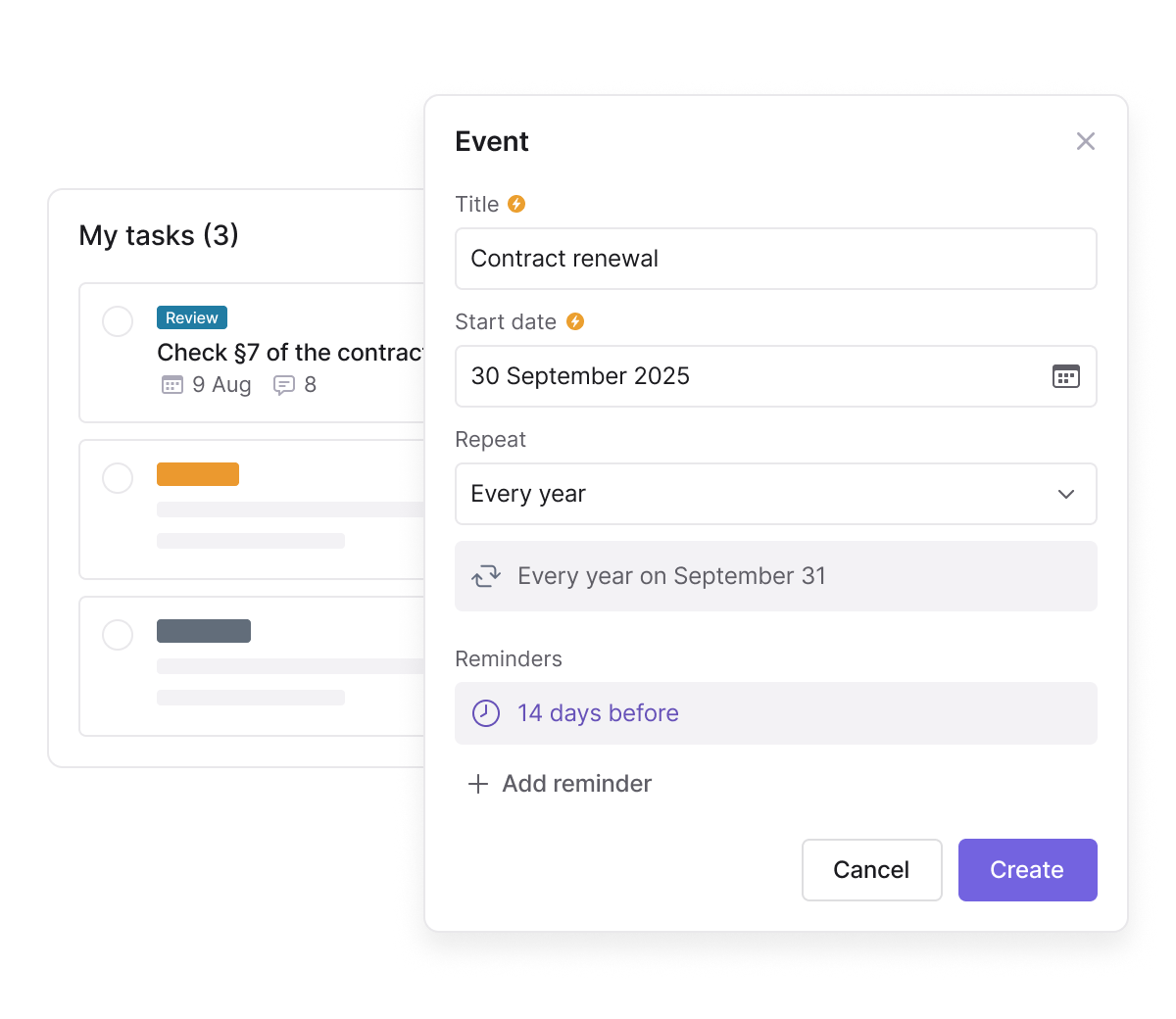
Stay on top of deadlines. Automatically
Unwanted renewals? Not on Inhubber’s watch
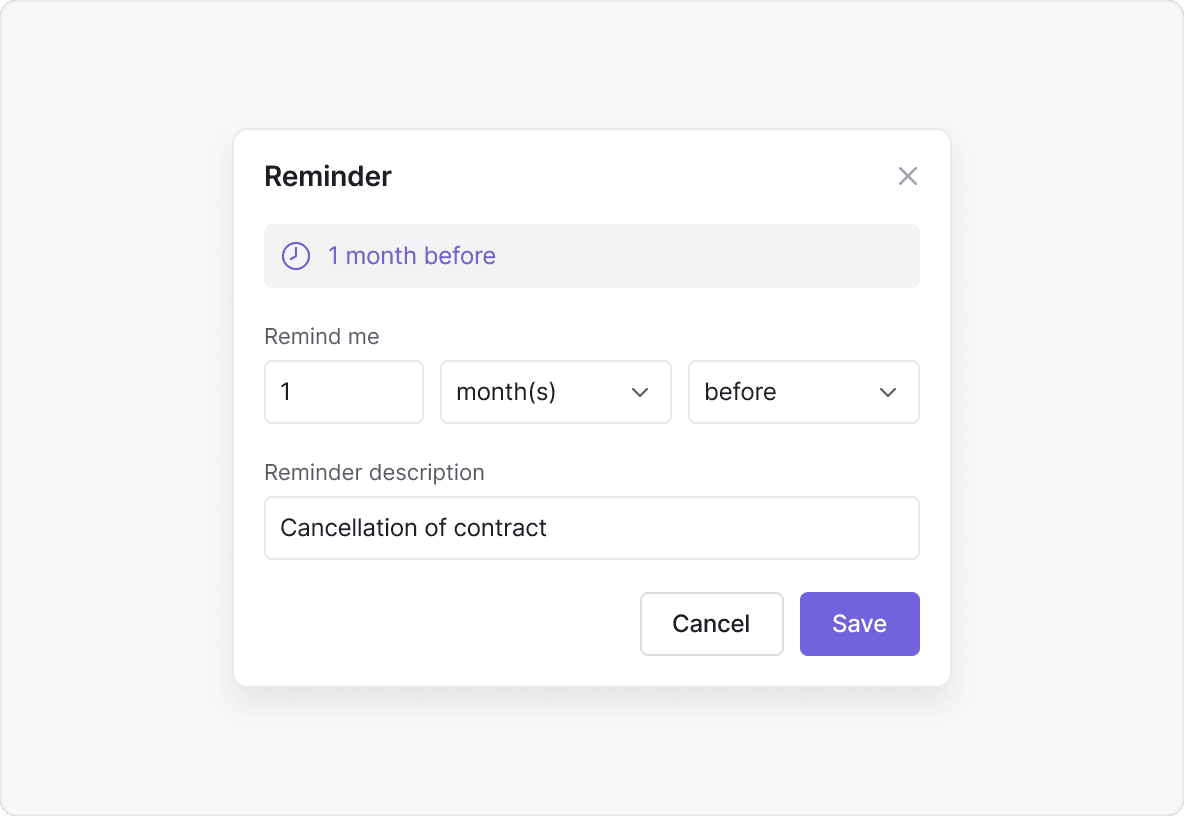
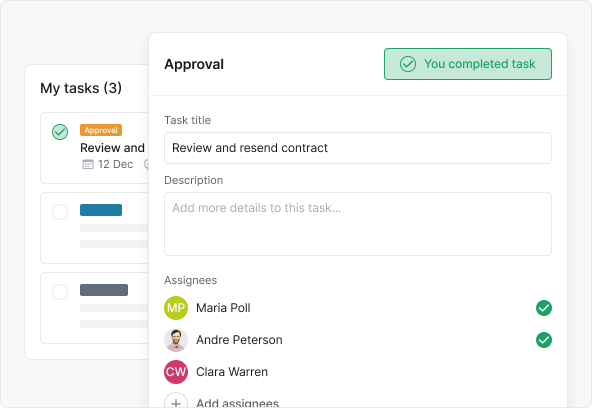
Reminders on autopilot
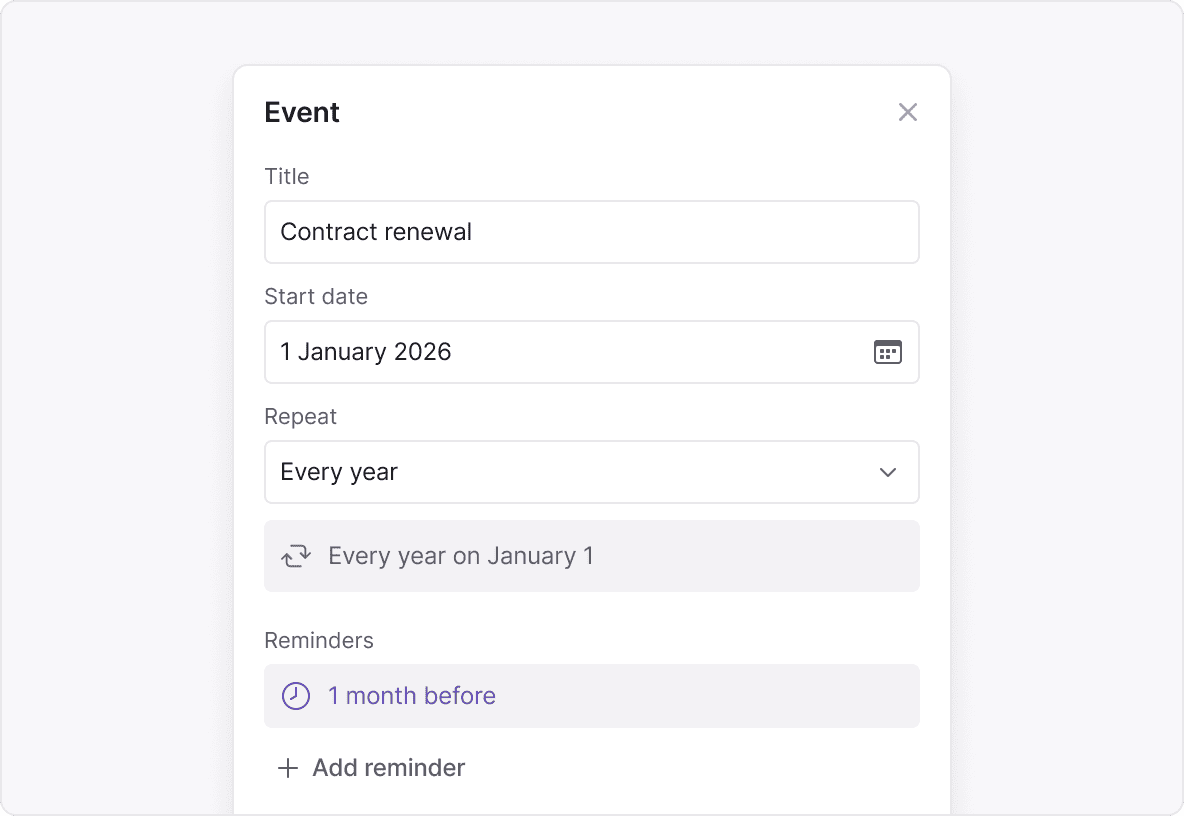
Deadlines under control — automatically. Less effort, lower costs, more peace of mind.
Request a demo“Powerfully simple”
 Automatic deadline monitoring is a real game changer for us. We used to manage deadlines manually in Excel spreadsheets, which was naturally error-prone. Now Inhubber ensures that we are notified in a timely manner about upcoming termination periods. This has already saved us from unnecessary costs.
Automatic deadline monitoring is a real game changer for us. We used to manage deadlines manually in Excel, which was error-prone. Now Inhubber notifies us in time about upcoming termination periods, helping us avoid missed deadlines and unnecessary costs.
Automatic deadline monitoring is a real game changer for us. We used to manage deadlines manually in Excel spreadsheets, which was naturally error-prone. Now Inhubber ensures that we are notified in a timely manner about upcoming termination periods. This has already saved us from unnecessary costs.
Automatic deadline monitoring is a real game changer for us. We used to manage deadlines manually in Excel, which was error-prone. Now Inhubber notifies us in time about upcoming termination periods, helping us avoid missed deadlines and unnecessary costs.

 Especially in the logistics sector, many contracts are long and complex. With the AI summary, I can understand a 40-page contract in just a few sentences. This saves an incredible amount of time. When I log in in the morning, I immediately see upcoming deadlines, tasks, and signature requests. That way, I know right away what I need to focus on. It used to be much more unclear.
Especially in logistics, contracts are often long and complex. With AI summaries, I can understand a 40-page contract in seconds, saving significant time. Each morning, I instantly see deadlines, tasks, and signature requests—so I know exactly what to focus on.
Especially in the logistics sector, many contracts are long and complex. With the AI summary, I can understand a 40-page contract in just a few sentences. This saves an incredible amount of time. When I log in in the morning, I immediately see upcoming deadlines, tasks, and signature requests. That way, I know right away what I need to focus on. It used to be much more unclear.
Especially in logistics, contracts are often long and complex. With AI summaries, I can understand a 40-page contract in seconds, saving significant time. Each morning, I instantly see deadlines, tasks, and signature requests—so I know exactly what to focus on.

 Inhubber has fundamentally changed the way we handle our contracts by providing a user-friendly and efficient platform that ensures complete transparency. This change has led to significant time savings, particularly through improved organization and accessibility of data. In the financial sector, it is especially useful as it helps keep track of costs and deadlines, making it an essential tool for our sustainable growth.
Inhubber has transformed contract management with a user-friendly platform and full transparency. It saves time through better organization and data access. In finance, it’s valuable for tracking costs and deadlines, supporting growth.
Inhubber has fundamentally changed the way we handle our contracts by providing a user-friendly and efficient platform that ensures complete transparency. This change has led to significant time savings, particularly through improved organization and accessibility of data. In the financial sector, it is especially useful as it helps keep track of costs and deadlines, making it an essential tool for our sustainable growth.
Inhubber has transformed contract management with a user-friendly platform and full transparency. It saves time through better organization and data access. In finance, it’s valuable for tracking costs and deadlines, supporting growth.

 Thanks to Inhubber, it is now much easier and faster to rent out apartments, and I can even rent them out across the country without having to be there.
Thanks to Inhubber, it is now much easier and faster to rent out apartments, and I can even rent them out across the country without having to be there.
Thanks to Inhubber, it is now much easier and faster to rent out apartments, and I can even rent them out across the country without having to be there.

 Before we introduced Inhubber, we missed termination deadlines several times simply because no one remembered that the contract still existed and needed to be cancelled. This led to unnecessary costs that we wanted to avoid. With Inhubber, we can now be confident that this will no longer happen.
Before Inhubber, we missed termination deadlines because contracts were overlooked, leading to unnecessary costs. Now, we’re reliably notified in time and can be confident that deadlines are no longer missed.
Before we introduced Inhubber, we missed termination deadlines several times simply because no one remembered that the contract still existed and needed to be cancelled. This led to unnecessary costs that we wanted to avoid. With Inhubber, we can now be confident that this will no longer happen.
Before Inhubber, we missed termination deadlines because contracts were overlooked, leading to unnecessary costs. Now, we’re reliably notified in time and can be confident that deadlines are no longer missed.

 The advantages I see with Inhubber are, firstly, usability, meaning it’s easy to use for our team members and business partners. The second major advantage I see with Inhubber is the whole issue of data security, data availability, and more.
The advantages I see with Inhubber are, firstly, usability, meaning it’s easy to use for our team members and business partners. The second major advantage I see with Inhubber is the whole issue of data security, data availability, and more.
The advantages I see with Inhubber are, firstly, usability, meaning it’s easy to use for our team members and business partners. The second major advantage I see with Inhubber is the whole issue of data security, data availability, and more.

 After evaluating several software solutions, we chose Inhubber – not only because it offers a web-based solution that’s accessible from anywhere, but also because of the flexibility in structuring contracts. We wanted the option of storing our contracts in clearly structured categories and areas that perfectly fit our organization.
After evaluating several solutions, we chose Inhubber for its web-based accessibility and flexible contract structuring. It allows us to organize contracts into clear categories and areas that perfectly match our organization.
After evaluating several software solutions, we chose Inhubber – not only because it offers a web-based solution that’s accessible from anywhere, but also because of the flexibility in structuring contracts. We wanted the option of storing our contracts in clearly structured categories and areas that perfectly fit our organization.
After evaluating several solutions, we chose Inhubber for its web-based accessibility and flexible contract structuring. It allows us to organize contracts into clear categories and areas that perfectly match our organization.

 Inhubber was the perfect solution for our family-owned business.
We now have a complete overview of all contracts — structured by business units and contract types. Relevant documents are always easy to find, deadlines are automatically tracked, and nothing gets lost anymore.
What impressed us most was the 100% transparency, the ease of use, and the automatic identification of contract risks. Manual effort has been significantly reduced — we save around 80% of the time compared to before.
Inhubber has sustainably professionalized and simplified our contract management.
Inhubber is the perfect solution for our family business. We now have a full overview of all contracts, clearly structured and easy to access. Deadlines are tracked automatically, risks are identified, and manual effort is reduced—saving us around 80% of the time.
Inhubber was the perfect solution for our family-owned business.
We now have a complete overview of all contracts — structured by business units and contract types. Relevant documents are always easy to find, deadlines are automatically tracked, and nothing gets lost anymore.
What impressed us most was the 100% transparency, the ease of use, and the automatic identification of contract risks. Manual effort has been significantly reduced — we save around 80% of the time compared to before.
Inhubber has sustainably professionalized and simplified our contract management.
Inhubber is the perfect solution for our family business. We now have a full overview of all contracts, clearly structured and easy to access. Deadlines are tracked automatically, risks are identified, and manual effort is reduced—saving us around 80% of the time.

 With Inhubber, we now have a central overview of our contracts for the first time and much better control over long-term deadlines. What stands out most is how intuitive the system is: responsibilities are clearer, contracts are easier to find, and relevant information is available in a structured way. Inhubber makes professional contract management simple — and I would clearly recommend it to other municipal utilities.
With Inhubber, we have a central overview of our contracts and much better control over deadlines. The intuitive system creates clearer responsibilities, makes contracts easier to find, and noticeably simplifies our day-to-day work.
With Inhubber, we now have a central overview of our contracts for the first time and much better control over long-term deadlines. What stands out most is how intuitive the system is: responsibilities are clearer, contracts are easier to find, and relevant information is available in a structured way. Inhubber makes professional contract management simple — and I would clearly recommend it to other municipal utilities.
With Inhubber, we have a central overview of our contracts and much better control over deadlines. The intuitive system creates clearer responsibilities, makes contracts easier to find, and noticeably simplifies our day-to-day work.

 With Inhubber, we now have a clear central structure for our contracts, deadlines, and responsibilities. The system is easy to use, flexible enough to support our different departments, and helps us find contract information much faster. Automated deadline tracking and clearly defined access rights also make our day-to-day contract work more reliable and much easier to manage.
With Inhubber, we now have a clear central structure for our contracts, deadlines, and responsibilities. The system is easy to use, flexible enough for our different departments, and makes everyday contract work noticeably faster and more reliable.
With Inhubber, we now have a clear central structure for our contracts, deadlines, and responsibilities. The system is easy to use, flexible enough to support our different departments, and helps us find contract information much faster. Automated deadline tracking and clearly defined access rights also make our day-to-day contract work more reliable and much easier to manage.
With Inhubber, we now have a clear central structure for our contracts, deadlines, and responsibilities. The system is easy to use, flexible enough for our different departments, and makes everyday contract work noticeably faster and more reliable.




Award winning CLM software






FAQ
It’s simple: every deadline belongs to its contract, and that’s exactly where it’s managed. You enter notice periods, contract terms, and renewal dates once (or let the AI pick them up for you), and Inhubber lets you know when it’s time. No more maintaining Excel lists or keeping a separate calendar that nobody can make sense of after a while. Your team knows well in advance when a decision is coming up and can cancel, renew, or renegotiate calmly instead of scrambling at the last minute. The more contracts you have, the more you’ll notice the difference.
Yes, the AI takes care of that for you. It reads contract terms, cancellation dates, renewal clauses, and other key details straight from your contract documents. So you can skip flipping through every single contract and typing the details into some list — with hundreds of contracts, that’s otherwise a job that takes days. The extracted data lands right in Inhubber, ready to be used for automatic reminders. And don’t worry: you always have the final say. Your team can review everything and fix anything that’s off.
Yes — and exactly when you want it to. You set the timing, Inhubber handles the rest. Here’s the point: you don’t find out about a contract three days before the deadline. You get enough time to actually look at it. Cancel? Renew? Renegotiate? You decide, without the time pressure. Especially with long notice periods, that head start makes all the difference. One more thing: deadlines no longer live in one person’s calendar. If someone switches teams or happens to be on vacation, nothing slips through.
Sound familiar? A contract renews automatically, and nobody saw it coming. Usually it’s not that no one knew about the deadline — it just got lost in the day-to-day. That’s exactly where Inhubber comes in: cancellation and renewal dates are linked to the contract, and you’re notified in good time. That leaves enough room to review the contract and its terms and make a conscious decision about what happens next. This matters most for subscriptions, supplier agreements, leases, and service contracts — the ones that like to renew quietly in the background. Instead of being annoyed afterwards, you decide beforehand.
As early as you like — that’s entirely up to you. How much lead time makes sense depends on the contract: for a notice period that involves internal alignment or renegotiation, a few months is often realistic. For other dates, a week might be plenty. The nice part: a deadline that used to show up out of nowhere becomes a process you can actually plan. Nobody has to go through contract lists every day — Inhubber speaks up when it’s time to act.
Yes — and for important deadlines, that’s a smart move. A single reminder can easily get buried in a full inbox, or the decision gets postponed and then forgotten. That’s why you can stagger several reminders: an early one that puts the topic on the table, and follow-ups as the date gets closer. The deadline stays visible until a decision is actually made. Especially for contracts that need to go through review or approval first, this takes a lot of pressure off — without anyone having to chase things manually.
Yes. Once set up, Inhubber sends notifications on its own, right on schedule. Nobody has to open contracts regularly or keep their own calendar list. It sounds like a small thing, but in practice it makes a big difference: deadlines no longer depend on one specific person remembering them. If responsibilities change or someone is out for a while, the reminder still goes out. Especially with larger contract portfolios, it’s really the only way to stay on top of things without it turning into a full-time job.
Yes. Instead of piecing information together from contracts, spreadsheets, emails, and various calendars, you see everything that’s coming up in one central place: Where is a notice period about to run out? Which contract ends soon? Where is an auto-renewal on the horizon? If you manage a lot of contracts, this makes prioritizing much easier. You focus on the contracts that actually need a decision — and let the rest run in peace. Combined with automatic reminders, you get both: a clear picture of today and enough lead time for everything ahead.
Basically all the ones that matter to you: notice periods, contract start and end dates, terms, renewal dates — and whatever else is important for a specific contract. Because every contract ticks differently: a lease has different key dates than a license or supplier agreement. What it really comes down to is this: dates shouldn’t be scattered across calendars and spreadsheets, but sit right with the contract they belong to. That way, your whole team works from the same information — and the reminders happen automatically on top.
Yes. Very few companies start out with a perfectly digital contract portfolio — usually it’s a mix of new contracts, older PDFs, and scanned documents from the filing cabinet. Inhubber handles all of it. The AI-powered analysis pulls the important details out of existing documents too: contract terms, cancellation dates, and more. You link that data to the contract it belongs to and use it for deadline tracking and reminders as usual. Bit by bit, you bring even a contract portfolio that has grown over the years into shape — without retyping everything by hand.
That depends on the contract. A missed notice period often means the contract renews automatically or can only be canceled much later — and that tends to cost money nobody wanted to spend. Let’s be honest: once a deadline has passed, even Inhubber can’t bring it back. That’s why we step in earlier. All the important dates sit centrally with the contract, the reminders arrive in time — and with them, the time to react. So it never gets to the point where a deadline lives only in one person’s calendar and quietly gets forgotten.
In two places. The obvious one: missed notice periods cost money. A contract runs for another year even though the service is no longer needed or better terms are available elsewhere — and that adds up fast. With timely reminders, there’s enough time to review, cancel, or renegotiate. The less obvious one: working hours. Maintaining Excel lists, cross-checking calendars, regularly checking whether something is coming up — all of that goes away. Bottom line, you save twice: on the contract costs themselves and on the time your team used to spend on manual tracking.