



Every transport relationship under control




in Germany

certified

encrypted
Trusted by over 10000 happy users


Customer, carrier, and subcontractor contracts in one place
Freight rates and surcharges always up to date
Carriers and subcontractors under control
Liability and obligations under control
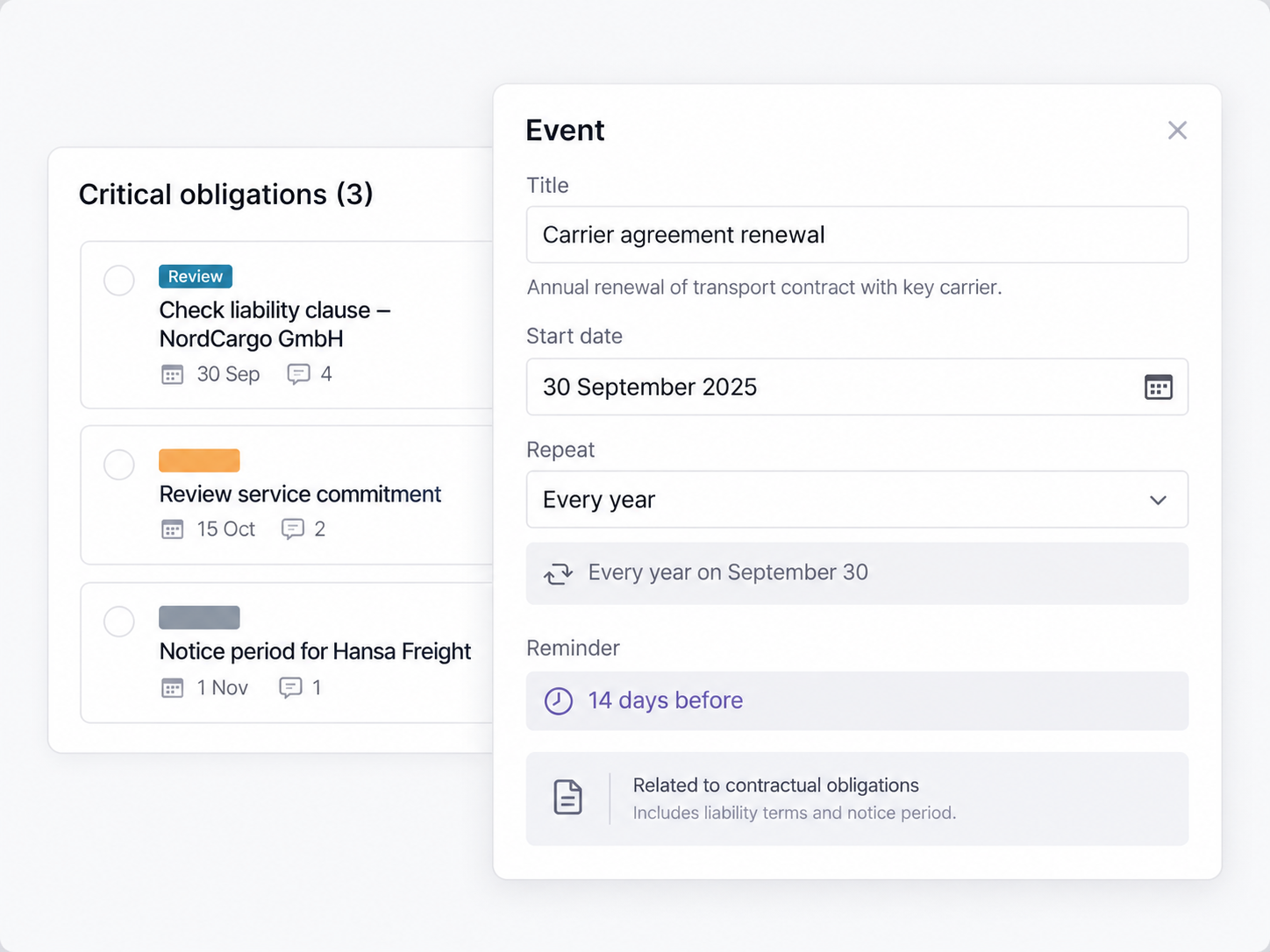
Full control over your transport contracts
The result: dispatch, procurement, sales, and management see not just individual contracts, but the big picture. Open tasks, current terms, and contractual obligations – across all customers, carriers, and subcontractors.
“Powerfully simple”
 Automatic deadline monitoring is a real game changer for us. We used to manage deadlines manually in Excel spreadsheets, which was naturally error-prone. Now Inhubber ensures that we are notified in a timely manner about upcoming termination periods. This has already saved us from unnecessary costs.
Automatic deadline monitoring is a real game changer for us. We used to manage deadlines manually in Excel, which was error-prone. Now Inhubber notifies us in time about upcoming termination periods, helping us avoid missed deadlines and unnecessary costs.
Automatic deadline monitoring is a real game changer for us. We used to manage deadlines manually in Excel spreadsheets, which was naturally error-prone. Now Inhubber ensures that we are notified in a timely manner about upcoming termination periods. This has already saved us from unnecessary costs.
Automatic deadline monitoring is a real game changer for us. We used to manage deadlines manually in Excel, which was error-prone. Now Inhubber notifies us in time about upcoming termination periods, helping us avoid missed deadlines and unnecessary costs.

 Especially in the logistics sector, many contracts are long and complex. With the AI summary, I can understand a 40-page contract in just a few sentences. This saves an incredible amount of time. When I log in in the morning, I immediately see upcoming deadlines, tasks, and signature requests. That way, I know right away what I need to focus on. It used to be much more unclear.
Especially in logistics, contracts are often long and complex. With AI summaries, I can understand a 40-page contract in seconds, saving significant time. Each morning, I instantly see deadlines, tasks, and signature requests—so I know exactly what to focus on.
Especially in the logistics sector, many contracts are long and complex. With the AI summary, I can understand a 40-page contract in just a few sentences. This saves an incredible amount of time. When I log in in the morning, I immediately see upcoming deadlines, tasks, and signature requests. That way, I know right away what I need to focus on. It used to be much more unclear.
Especially in logistics, contracts are often long and complex. With AI summaries, I can understand a 40-page contract in seconds, saving significant time. Each morning, I instantly see deadlines, tasks, and signature requests—so I know exactly what to focus on.

 Inhubber has fundamentally changed the way we handle our contracts by providing a user-friendly and efficient platform that ensures complete transparency. This change has led to significant time savings, particularly through improved organization and accessibility of data. In the financial sector, it is especially useful as it helps keep track of costs and deadlines, making it an essential tool for our sustainable growth.
Inhubber has transformed contract management with a user-friendly platform and full transparency. It saves time through better organization and data access. In finance, it’s valuable for tracking costs and deadlines, supporting growth.
Inhubber has fundamentally changed the way we handle our contracts by providing a user-friendly and efficient platform that ensures complete transparency. This change has led to significant time savings, particularly through improved organization and accessibility of data. In the financial sector, it is especially useful as it helps keep track of costs and deadlines, making it an essential tool for our sustainable growth.
Inhubber has transformed contract management with a user-friendly platform and full transparency. It saves time through better organization and data access. In finance, it’s valuable for tracking costs and deadlines, supporting growth.

 Thanks to Inhubber, it is now much easier and faster to rent out apartments, and I can even rent them out across the country without having to be there.
Thanks to Inhubber, it is now much easier and faster to rent out apartments, and I can even rent them out across the country without having to be there.
Thanks to Inhubber, it is now much easier and faster to rent out apartments, and I can even rent them out across the country without having to be there.

 Before we introduced Inhubber, we missed termination deadlines several times simply because no one remembered that the contract still existed and needed to be cancelled. This led to unnecessary costs that we wanted to avoid. With Inhubber, we can now be confident that this will no longer happen.
Before Inhubber, we missed termination deadlines because contracts were overlooked, leading to unnecessary costs. Now, we’re reliably notified in time and can be confident that deadlines are no longer missed.
Before we introduced Inhubber, we missed termination deadlines several times simply because no one remembered that the contract still existed and needed to be cancelled. This led to unnecessary costs that we wanted to avoid. With Inhubber, we can now be confident that this will no longer happen.
Before Inhubber, we missed termination deadlines because contracts were overlooked, leading to unnecessary costs. Now, we’re reliably notified in time and can be confident that deadlines are no longer missed.

 The advantages I see with Inhubber are, firstly, usability, meaning it’s easy to use for our team members and business partners. The second major advantage I see with Inhubber is the whole issue of data security, data availability, and more.
The advantages I see with Inhubber are, firstly, usability, meaning it’s easy to use for our team members and business partners. The second major advantage I see with Inhubber is the whole issue of data security, data availability, and more.
The advantages I see with Inhubber are, firstly, usability, meaning it’s easy to use for our team members and business partners. The second major advantage I see with Inhubber is the whole issue of data security, data availability, and more.

 After evaluating several software solutions, we chose Inhubber – not only because it offers a web-based solution that’s accessible from anywhere, but also because of the flexibility in structuring contracts. We wanted the option of storing our contracts in clearly structured categories and areas that perfectly fit our organization.
After evaluating several solutions, we chose Inhubber for its web-based accessibility and flexible contract structuring. It allows us to organize contracts into clear categories and areas that perfectly match our organization.
After evaluating several software solutions, we chose Inhubber – not only because it offers a web-based solution that’s accessible from anywhere, but also because of the flexibility in structuring contracts. We wanted the option of storing our contracts in clearly structured categories and areas that perfectly fit our organization.
After evaluating several solutions, we chose Inhubber for its web-based accessibility and flexible contract structuring. It allows us to organize contracts into clear categories and areas that perfectly match our organization.

 Inhubber was the perfect solution for our family-owned business.
We now have a complete overview of all contracts — structured by business units and contract types. Relevant documents are always easy to find, deadlines are automatically tracked, and nothing gets lost anymore.
What impressed us most was the 100% transparency, the ease of use, and the automatic identification of contract risks. Manual effort has been significantly reduced — we save around 80% of the time compared to before.
Inhubber has sustainably professionalized and simplified our contract management.
Inhubber is the perfect solution for our family business. We now have a full overview of all contracts, clearly structured and easy to access. Deadlines are tracked automatically, risks are identified, and manual effort is reduced—saving us around 80% of the time.
Inhubber was the perfect solution for our family-owned business.
We now have a complete overview of all contracts — structured by business units and contract types. Relevant documents are always easy to find, deadlines are automatically tracked, and nothing gets lost anymore.
What impressed us most was the 100% transparency, the ease of use, and the automatic identification of contract risks. Manual effort has been significantly reduced — we save around 80% of the time compared to before.
Inhubber has sustainably professionalized and simplified our contract management.
Inhubber is the perfect solution for our family business. We now have a full overview of all contracts, clearly structured and easy to access. Deadlines are tracked automatically, risks are identified, and manual effort is reduced—saving us around 80% of the time.

 With Inhubber, we now have a central overview of our contracts for the first time and much better control over long-term deadlines. What stands out most is how intuitive the system is: responsibilities are clearer, contracts are easier to find, and relevant information is available in a structured way. Inhubber makes professional contract management simple — and I would clearly recommend it to other municipal utilities.
With Inhubber, we have a central overview of our contracts and much better control over deadlines. The intuitive system creates clearer responsibilities, makes contracts easier to find, and noticeably simplifies our day-to-day work.
With Inhubber, we now have a central overview of our contracts for the first time and much better control over long-term deadlines. What stands out most is how intuitive the system is: responsibilities are clearer, contracts are easier to find, and relevant information is available in a structured way. Inhubber makes professional contract management simple — and I would clearly recommend it to other municipal utilities.
With Inhubber, we have a central overview of our contracts and much better control over deadlines. The intuitive system creates clearer responsibilities, makes contracts easier to find, and noticeably simplifies our day-to-day work.

 With Inhubber, we now have a clear central structure for our contracts, deadlines, and responsibilities. The system is easy to use, flexible enough to support our different departments, and helps us find contract information much faster. Automated deadline tracking and clearly defined access rights also make our day-to-day contract work more reliable and much easier to manage.
With Inhubber, we now have a clear central structure for our contracts, deadlines, and responsibilities. The system is easy to use, flexible enough for our different departments, and makes everyday contract work noticeably faster and more reliable.
With Inhubber, we now have a clear central structure for our contracts, deadlines, and responsibilities. The system is easy to use, flexible enough to support our different departments, and helps us find contract information much faster. Automated deadline tracking and clearly defined access rights also make our day-to-day contract work more reliable and much easier to manage.
With Inhubber, we now have a clear central structure for our contracts, deadlines, and responsibilities. The system is easy to use, flexible enough for our different departments, and makes everyday contract work noticeably faster and more reliable.





Award winning CLM software






FAQ
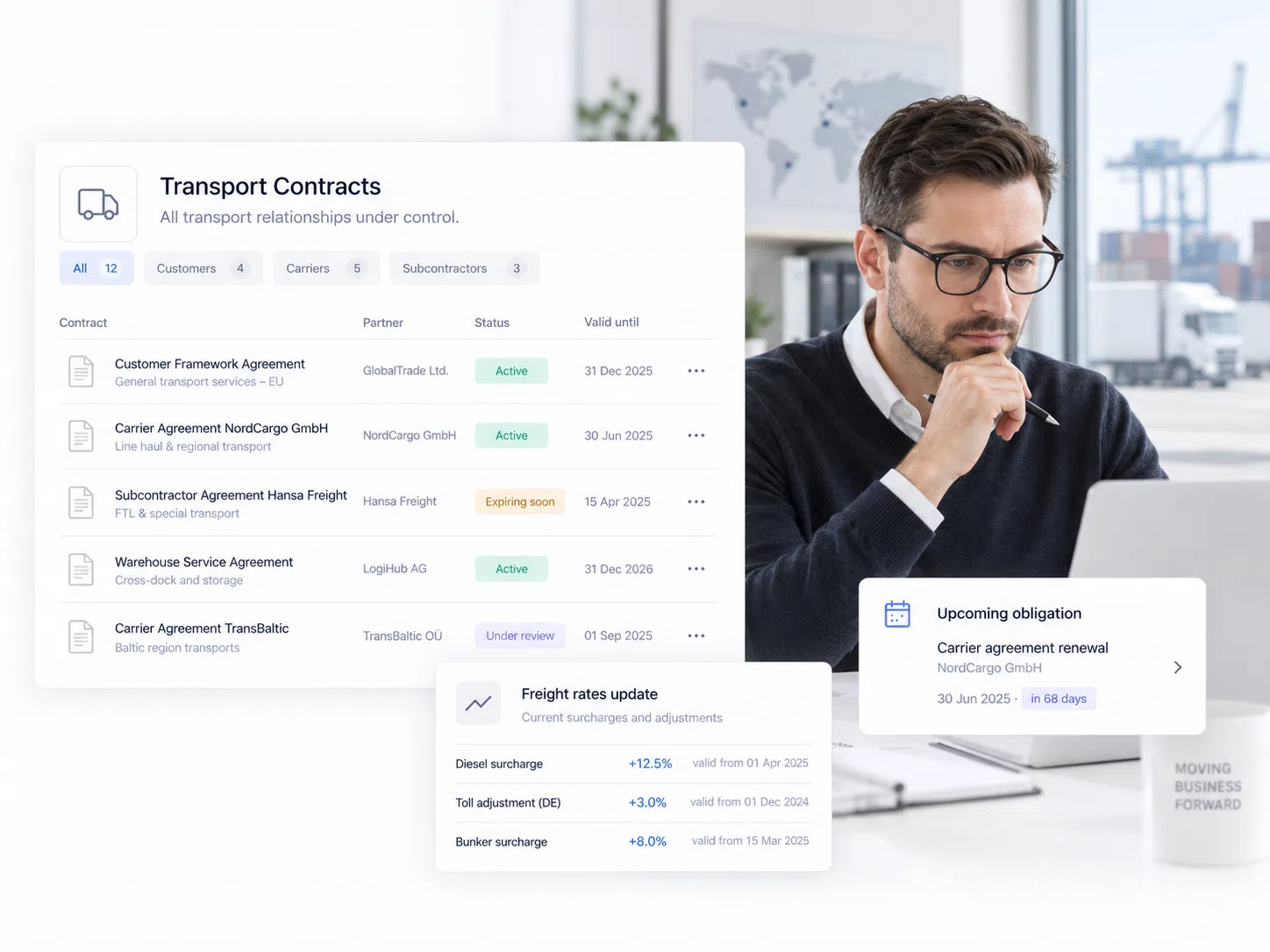
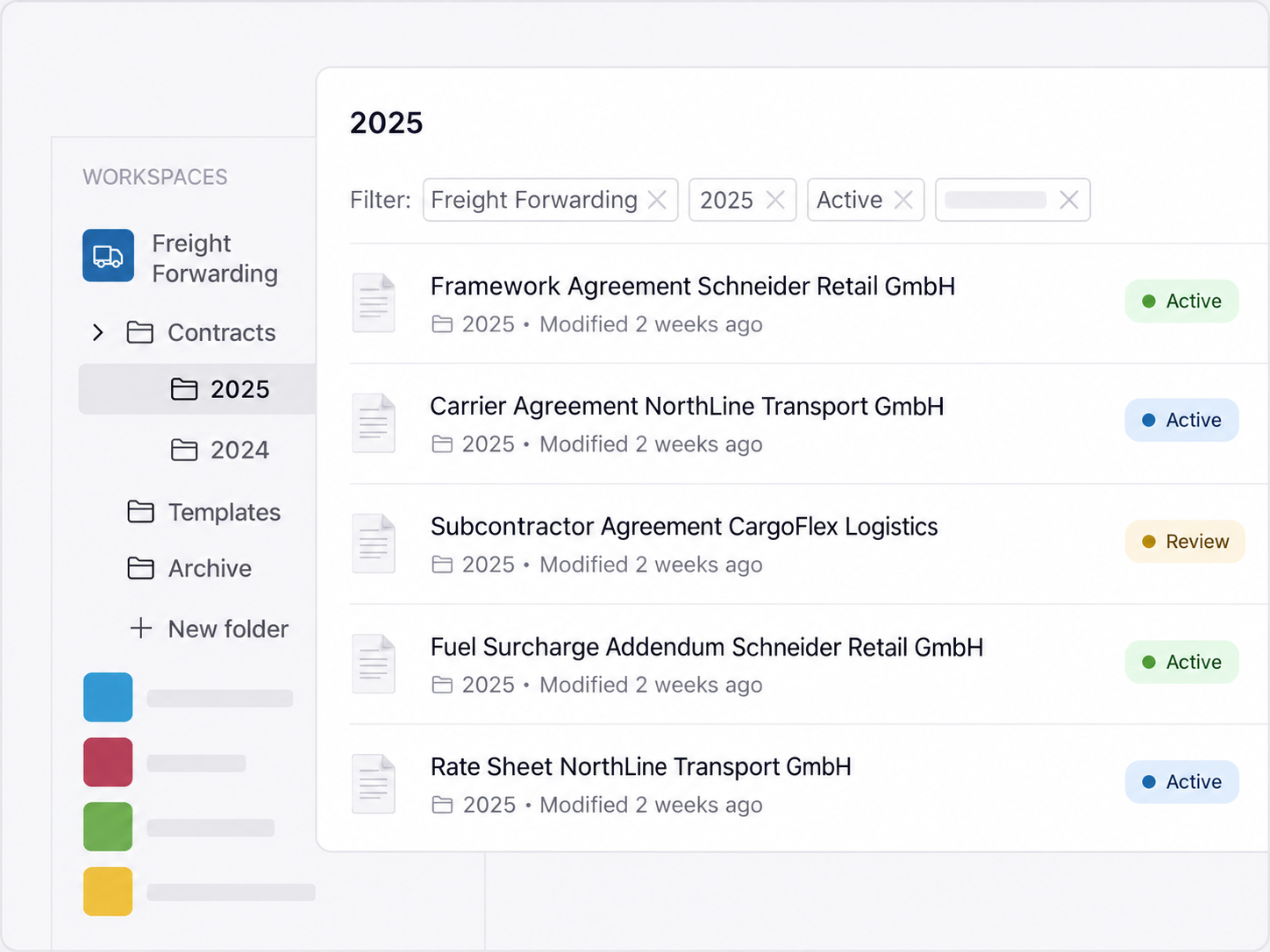
Freight forwarders juggle customers, carriers, subcontractors, and service providers every day – and with them a flood of contracts, rate sheets, insurance certificates, and attachments, spread across countless systems. Inhubber brings it all together on one central CLM platform and assigns every document to the right contracting party. Your team sees at a glance which agreements apply, which amendments belong to them, and which version is current. Deadlines, tasks, and responsibilities are attached directly to the contract. The result: no more parallel Excel lists, no more email searches, but a single source of truth for dispatch, procurement, sales, and management.
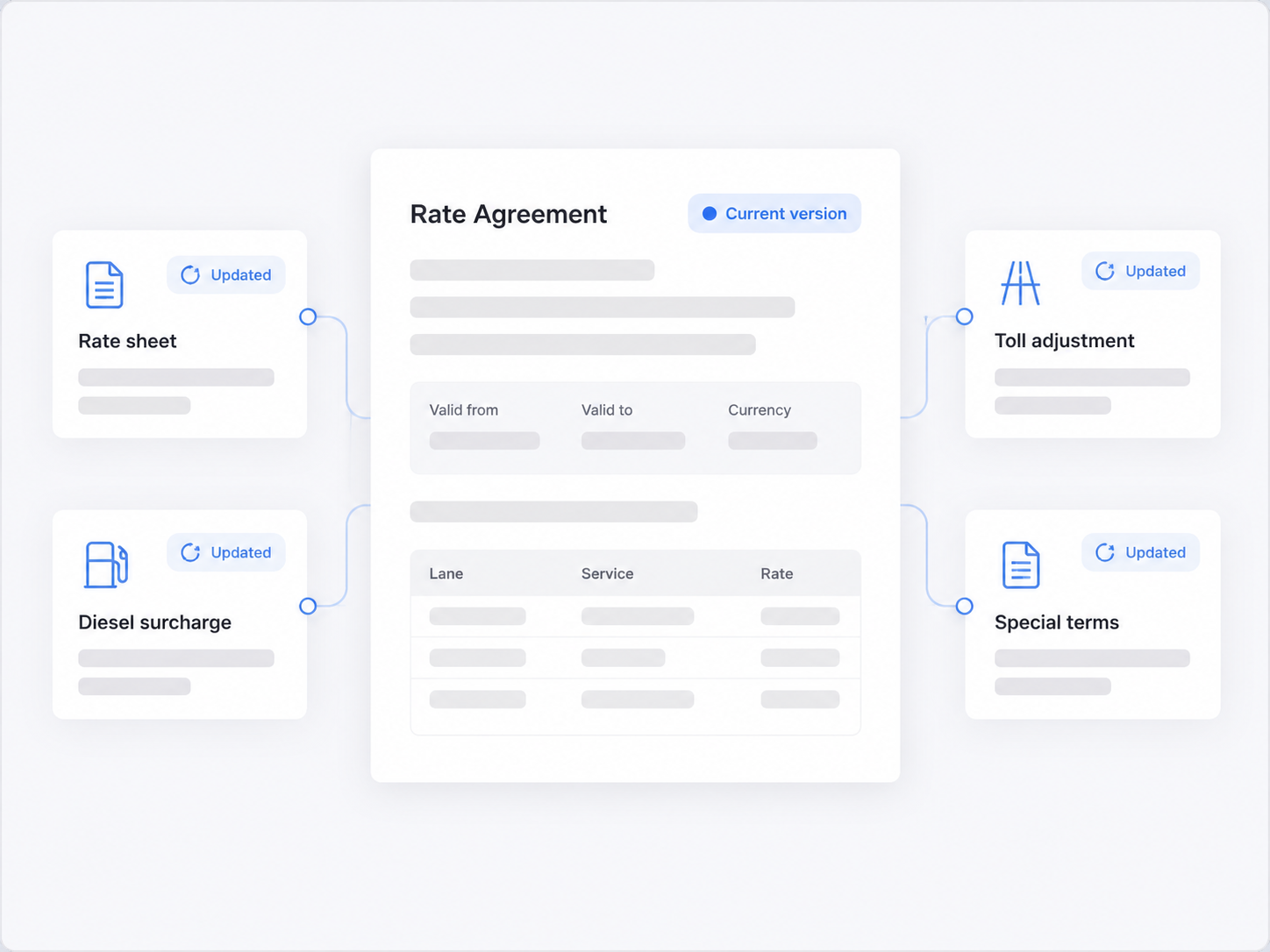
Freight rates and surcharges are always in motion: diesel, tolls, seasonal adjustments, special terms. If rate sheets sit separately from the main contract, you quickly end up calculating with outdated terms – and that costs margin. Inhubber links rate agreements and amendments directly to the respective customer or carrier contract. You see immediately which terms apply and when they were changed. Sales, procurement, and dispatch work with the same figures instead of piecing rates together from emails, folders, and local files.
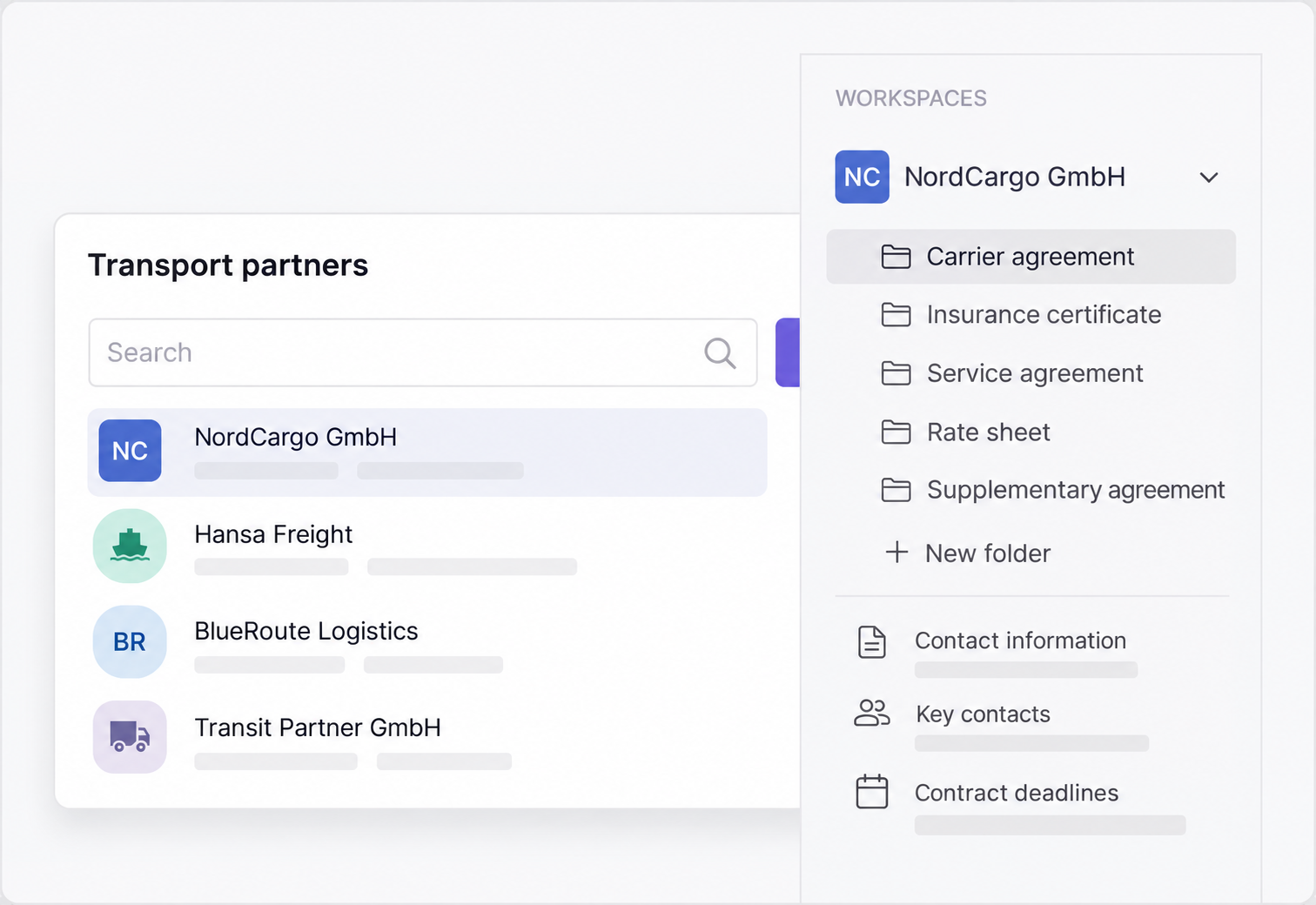
Without carriers and subcontractors, no shipment moves. But each partner often comes with a whole package of documents: contracts, service agreements, insurance certificates, attachments, contact persons, deadlines. Inhubber assigns all of it cleanly to the respective transport partner. This creates a complete contract overview per carrier or subcontractor. Your team checks in seconds what has been agreed, which documents are current, and which deadlines are coming up. Ideal for day-to-day collaboration, for renewals, renegotiations, and internal audits. A collection of files becomes a manageable partner relationship.
Customer, carrier, service provider, and framework contracts – each with its own term and its own renewal logic. Managing that in calendars, spreadsheets, or in the heads of individual employees is playing with risk. Inhubber links deadlines directly to the contract and reminds the responsible people in good time. That leaves enough lead time to review terms, prepare renegotiations, or terminate on time. No unwanted renewals, less manual tracking, proactive instead of reactive contract management.
In the forwarding business, multiple parties are often involved in a single transport service, and each contract level can have its own liability limits, service commitments, and special provisions. This is exactly where expensive gaps arise. Inhubber makes this information available in a structured way and links it to the respective contract. AI-powered analysis quickly finds relevant clauses and obligations so your team can go straight to the decisive passages during a review. The legal assessment remains with your experts. The added value: critical contract content no longer hides in long documents, but is right where you need it.
Terms, terminations, prices, liability, service conditions: the decisive information is often spread across dozens of pages. Inhubber’s AI-powered contract analysis identifies it quickly and makes it available in a structured way. A real efficiency lever for teams that regularly review many customer, carrier, or service provider contracts. Instead of combing through every contract manually, you find and compare relevant information in a fraction of the time. Important: AI does not replace legal or commercial assessment. It ensures your team gets faster access to the information that really drives operational and commercial decisions.
Sales needs customer terms, procurement negotiates with carriers, dispatch needs services and contact persons. Everyone works with the same contractual relationships, but often with their own lists and folders. The result: conflicting information. Inhubber creates a shared contract base with role-based access. Contracts, deadlines, tasks, amendments, and responsibilities are centrally linked. All departments work with the same up-to-date information without maintaining data twice. Fewer follow-up questions, better collaboration, and traceable decisions across departmental boundaries.
Transport contracts are living documents: freight rates get adjusted, surcharges added, service conditions changed, new attachments agreed. If amendments sit separately, soon nobody knows which version applies. Inhubber links every change, every attachment, and every supplementary agreement to the original contract. You see immediately how the contractual relationship has developed, what was added when, and which version currently counts. This protects against outdated price and service conditions and makes reviews and renegotiations far easier.
In short: all the ones that move your business. Customer and framework contracts, carrier agreements, subcontractor and service provider contracts, price and rate agreements, supplementary agreements, attachments, and amendments. Plus internal contracts with IT providers, software services, insurers, and other business partners. The decisive advantage: everything runs in one uniform structure, with deadlines, responsibilities, documents, and access rights. No separate repositories per contract type, but one platform, one standard, full control.
The bigger your network of customers, carriers, and subcontractors, the faster Excel lists and decentralized storage reach their limits. Terms, rates, amendments, contact persons, obligations, and deadlines all have to be tracked in parallel. Inhubber creates a shared contract structure for exactly that: carrier and customer contracts managed centrally, responsibilities and access rights clearly assigned, deadlines monitored automatically, contract content quickly accessible via AI. This way you scale your network without your administrative workload growing with every new transport partner.