


Clear contract ownership for every receivable
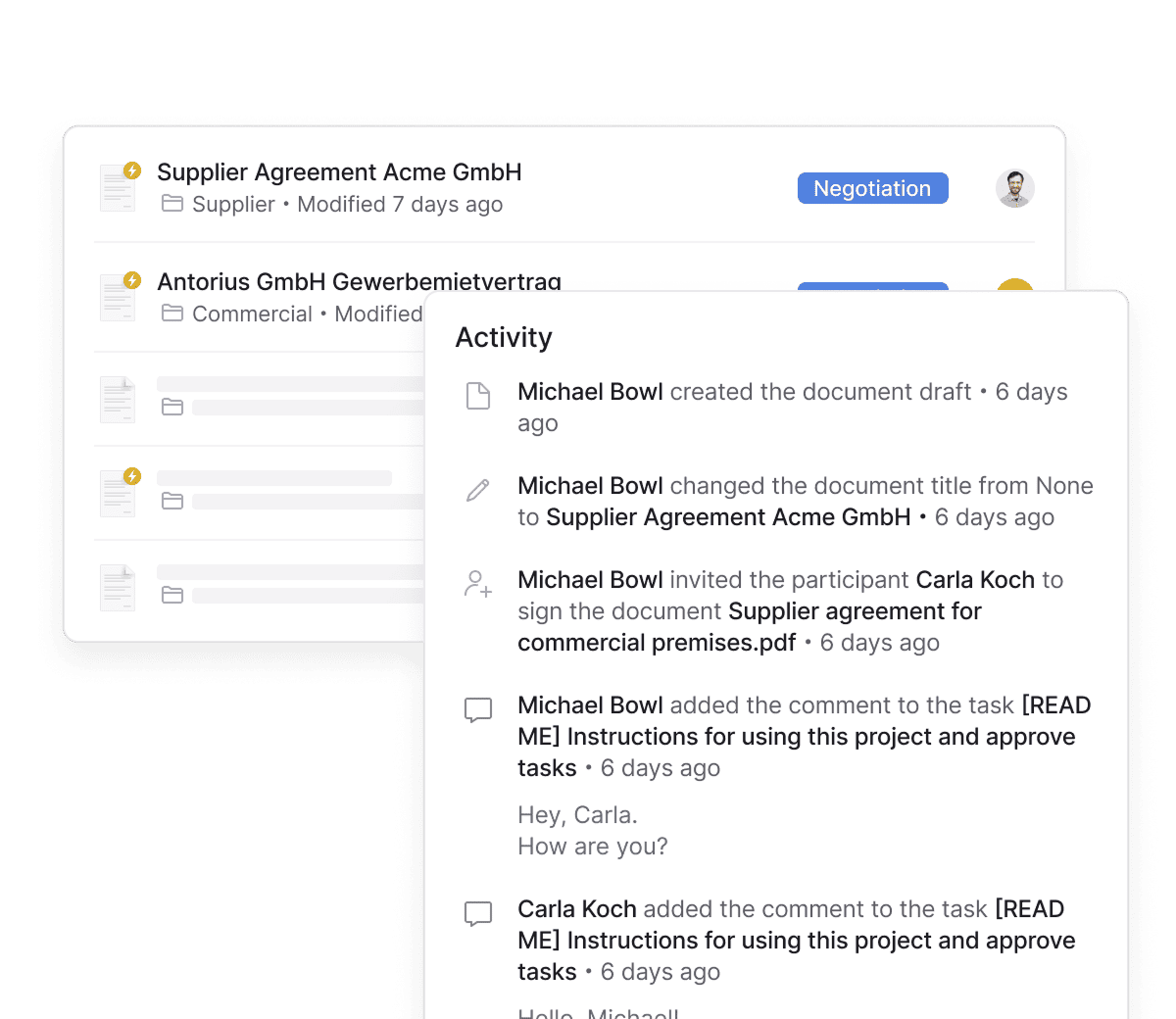




in Germany

certified

encrypted
Trusted by over 10000 happy users


Keep one record you can rely on
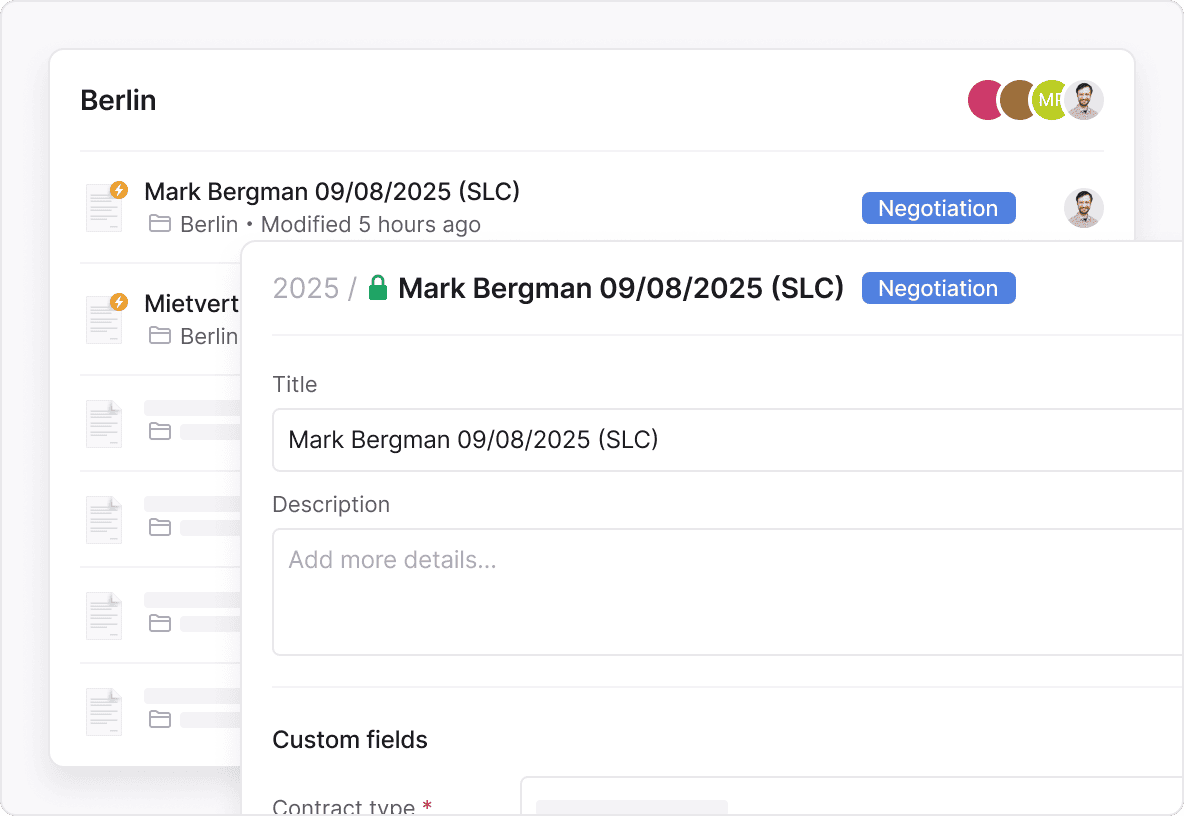
Transfer ownership, with the history attached
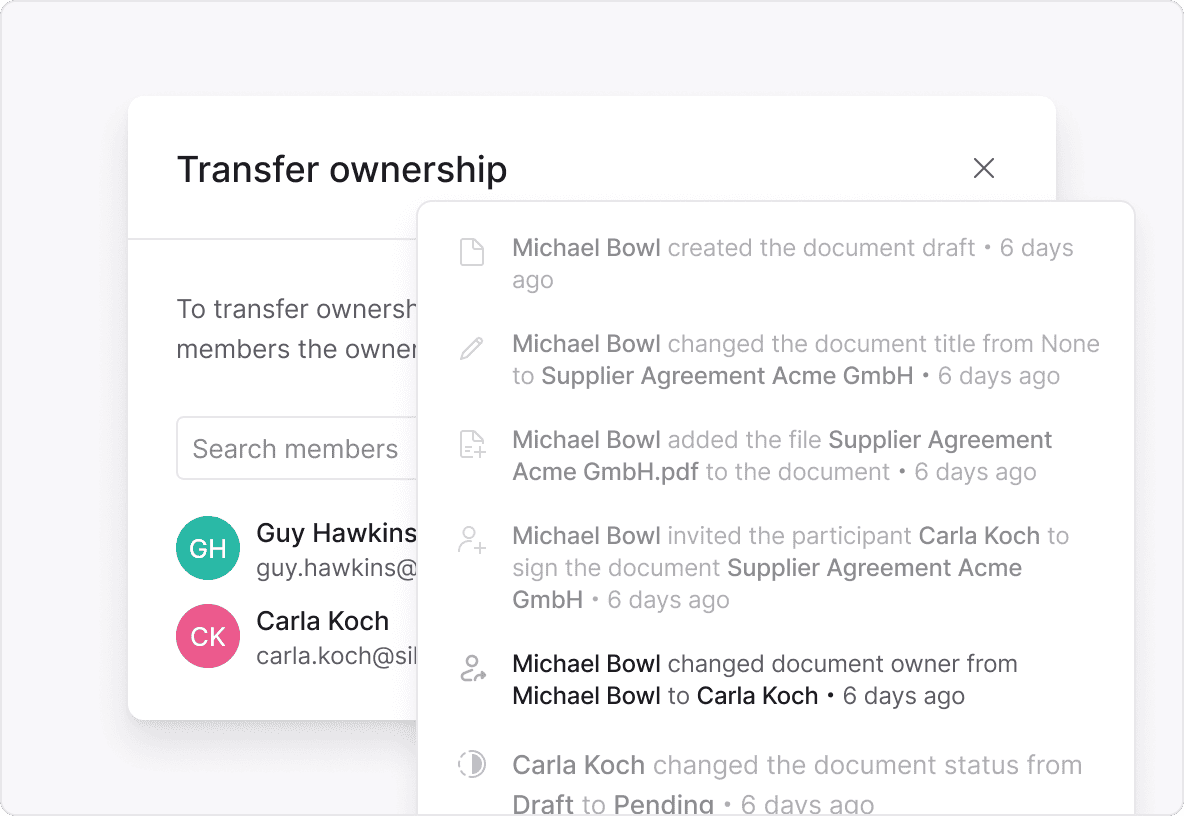
Verify ownership at any point in time
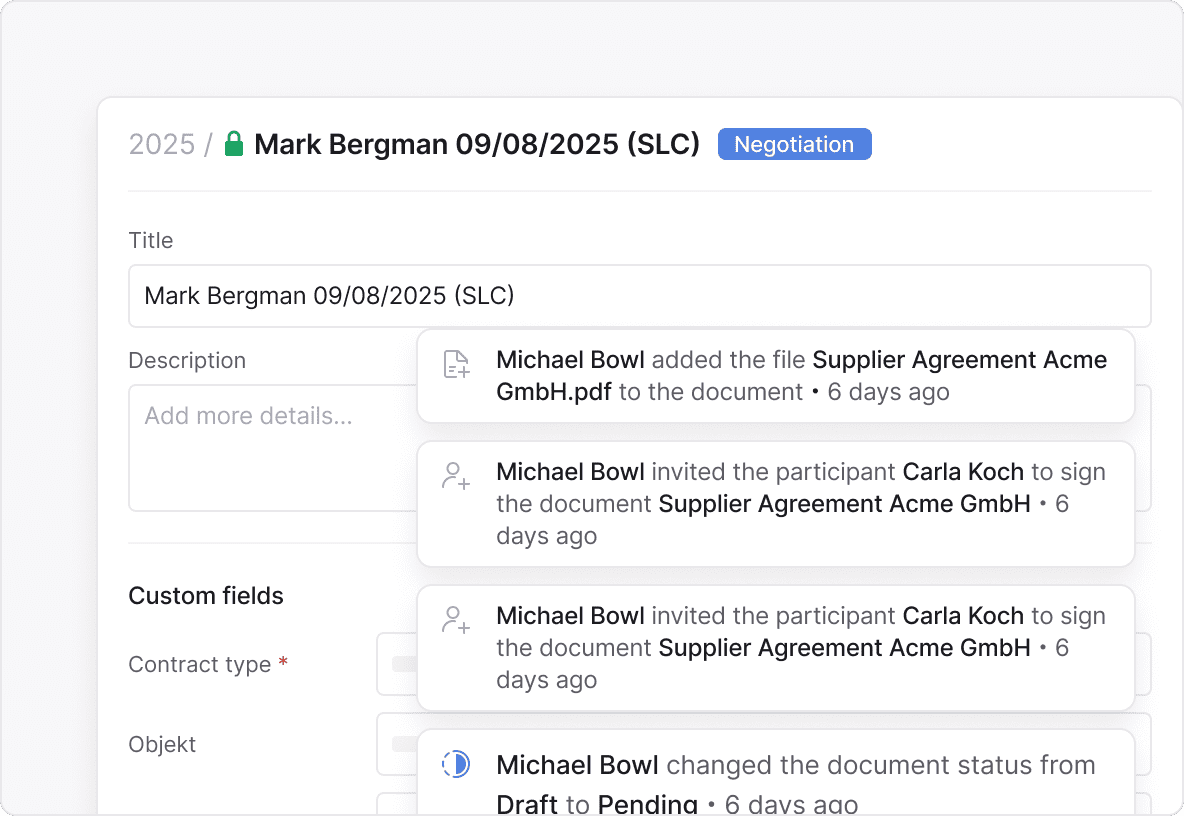
Never confuse a copy with the controlled record
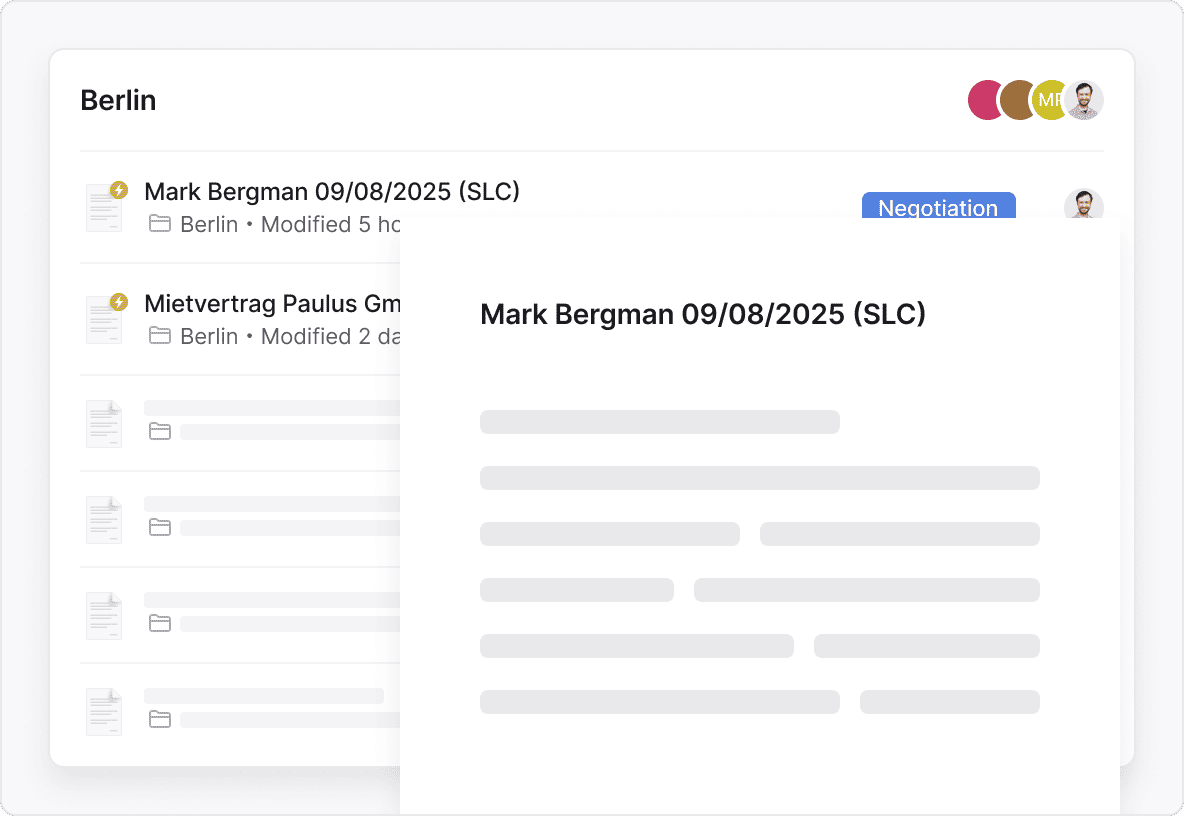
Control, integration, and secure workflows around every transfer


Less uncertainty in receivables financing
“Powerfully simple”
 Automatic deadline monitoring is a real game changer for us. We used to manage deadlines manually in Excel spreadsheets, which was naturally error-prone. Now Inhubber ensures that we are notified in a timely manner about upcoming termination periods. This has already saved us from unnecessary costs.
Automatic deadline monitoring is a real game changer for us. We used to manage deadlines manually in Excel, which was error-prone. Now Inhubber notifies us in time about upcoming termination periods, helping us avoid missed deadlines and unnecessary costs.

 Especially in the logistics sector, many contracts are long and complex. With the AI summary, I can understand a 40-page contract in just a few sentences. This saves an incredible amount of time. When I log in in the morning, I immediately see upcoming deadlines, tasks, and signature requests. That way, I know right away what I need to focus on. It used to be much more unclear.
Especially in logistics, contracts are often long and complex. With AI summaries, I can understand a 40-page contract in seconds, saving significant time. Each morning, I instantly see deadlines, tasks, and signature requests—so I know exactly what to focus on.

 Inhubber has fundamentally changed the way we handle our contracts by providing a user-friendly and efficient platform that ensures complete transparency. This change has led to significant time savings, particularly through improved organization and accessibility of data. In the financial sector, it is especially useful as it helps keep track of costs and deadlines, making it an essential tool for our sustainable growth.
Inhubber has transformed contract management with a user-friendly platform and full transparency. It saves time through better organization and data access. In finance, it’s valuable for tracking costs and deadlines, supporting growth.

 Thanks to Inhubber, it is now much easier and faster to rent out apartments, and I can even rent them out across the country without having to be there.

 Before we introduced Inhubber, we missed termination deadlines several times simply because no one remembered that the contract still existed and needed to be cancelled. This led to unnecessary costs that we wanted to avoid. With Inhubber, we can now be confident that this will no longer happen.
Before Inhubber, we missed termination deadlines because contracts were overlooked, leading to unnecessary costs. Now, we’re reliably notified in time and can be confident that deadlines are no longer missed.

 The advantages I see with Inhubber are, firstly, usability, meaning it’s easy to use for our team members and business partners. The second major advantage I see with Inhubber is the whole issue of data security, data availability, and more.

 After evaluating several software solutions, we chose Inhubber – not only because it offers a web-based solution that’s accessible from anywhere, but also because of the flexibility in structuring contracts. We wanted the option of storing our contracts in clearly structured categories and areas that perfectly fit our organization.
After evaluating several solutions, we chose Inhubber for its web-based accessibility and flexible contract structuring. It allows us to organize contracts into clear categories and areas that perfectly match our organization.

 Inhubber was the perfect solution for our family-owned business.
We now have a complete overview of all contracts — structured by business units and contract types. Relevant documents are always easy to find, deadlines are automatically tracked, and nothing gets lost anymore.
What impressed us most was the 100% transparency, the ease of use, and the automatic identification of contract risks. Manual effort has been significantly reduced — we save around 80% of the time compared to before.
Inhubber has sustainably professionalized and simplified our contract management.
Inhubber is the perfect solution for our family business. We now have a full overview of all contracts, clearly structured and easy to access. Deadlines are tracked automatically, risks are identified, and manual effort is reduced—saving us around 80% of the time.

 With Inhubber, we now have a central overview of our contracts for the first time and much better control over long-term deadlines. What stands out most is how intuitive the system is: responsibilities are clearer, contracts are easier to find, and relevant information is available in a structured way. Inhubber makes professional contract management simple — and I would clearly recommend it to other municipal utilities.
With Inhubber, we have a central overview of our contracts and much better control over deadlines. The intuitive system creates clearer responsibilities, makes contracts easier to find, and noticeably simplifies our day-to-day work.

 With Inhubber, we now have a clear central structure for our contracts, deadlines, and responsibilities. The system is easy to use, flexible enough to support our different departments, and helps us find contract information much faster. Automated deadline tracking and clearly defined access rights also make our day-to-day contract work more reliable and much easier to manage.
With Inhubber, we now have a clear central structure for our contracts, deadlines, and responsibilities. The system is easy to use, flexible enough for our different departments, and makes everyday contract work noticeably faster and more reliable.


Award winning CLM software






FAQ
Every contract in Inhubber can be kept together with its ownership, transfer, and activity history. Before a new transaction closes, your team can review whether the contract or associated receivable has already been transferred and who currently controls it. Because the relevant information stays connected in one environment, there’s less need to reconcile PDFs, inboxes, and spreadsheets just to understand what happened. That gives teams a clearer basis for spotting potential duplicate transfers before they become a financing issue.
Yes. Inhubber supports structured ownership transfer within the contract record. When a receivable or an associated contractual right changes hands, the transfer can be documented together with the previous owner, the new owner, a timestamp, and relevant supporting information. The result is a traceable transfer history that stays connected to the contract itself. Instead of documenting the same change across several disconnected systems, teams can keep the process and its history together.
Once a transfer is complete, the new owner or responsible party can be reflected directly in the contract record. Access permissions can also be adjusted to match the new ownership structure, depending on how the organization has set up its process. Previous ownership information and related actions remain part of the history. So the current status can change without losing the context behind it — something that becomes particularly useful when the contract changes hands more than once.
Yes. Inhubber keeps a chronological history of relevant contract activities, including ownership changes and transfer-related actions. Authorized users can look back and understand who controlled the contract at different points in time and when important changes took place. That makes it easier to reconstruct a contract’s lifecycle during an internal review, due diligence process, or audit, without having to piece the story together manually from several different sources.
The controlled contract record and its associated history remain inside Inhubber. Downloading or exporting a document doesn’t replace that central record or the transfer information connected to it. Exported versions can be identified as copies, helping users distinguish them from the record maintained within the system. This becomes especially useful when documents are shared externally, because the broader contract context and transfer history remain connected to the central record in Inhubber.
Inhubber provides a controlled and traceable record of contract status, transfers, timestamps, approvals, and related activity. That can help an organization document and verify how a receivable or contractual right has moved over time. What it does not do is determine whether an assignment is legally effective. That depends on the underlying agreement, applicable law, regulatory requirements, and the structure of the transaction. Inhubber supports documentation and auditability, rather than replacing the legal requirements governing the transfer itself.
Yes. Approval steps can be added before an ownership transfer is finalized. Depending on the organization, that might mean review by legal, finance, risk, or another responsible team. It gives sensitive transactions an extra control point before the contract record or related permissions are updated. More importantly, it helps teams follow the same defined process each time, rather than relying on an email thread or someone remembering to ask for approval at the right moment.
Yes. Inhubber can connect with banking, factoring, ERP, and other internal systems through APIs. This allows contract information, ownership status, and transfer data to be used within existing financial workflows rather than managed as a completely separate process. For example, contract verification can be connected with an internal approval or financing workflow. The exact setup depends on the systems involved, but the goal is simple: less duplicate data entry and fewer disconnected steps.
Yes. Access permissions can be adjusted as part of the transfer process to reflect the new roles and ownership structure. The new owner can receive the access they need, while permissions for previous participants can be reduced or removed according to the organization’s rules. Role-based controls also make it possible to give different levels of visibility to internal and external stakeholders, so access can follow the actual responsibilities around the contract instead of remaining unchanged after every transaction.
Inhubber is designed for organizations that need strong traceability, controlled access, and clear records of contract-related activity. Role-based permissions, activity histories, timestamps, structured workflows, and centralized contract records can support internal controls, audits, and compliance processes. When someone needs to understand how a receivable was handled over time, the relevant information is easier to trace. The exact regulatory requirements still depend on the institution, jurisdiction, and use case, so Inhubber should always be assessed against the organization’s own compliance framework.